
Last updated October 16, 2026
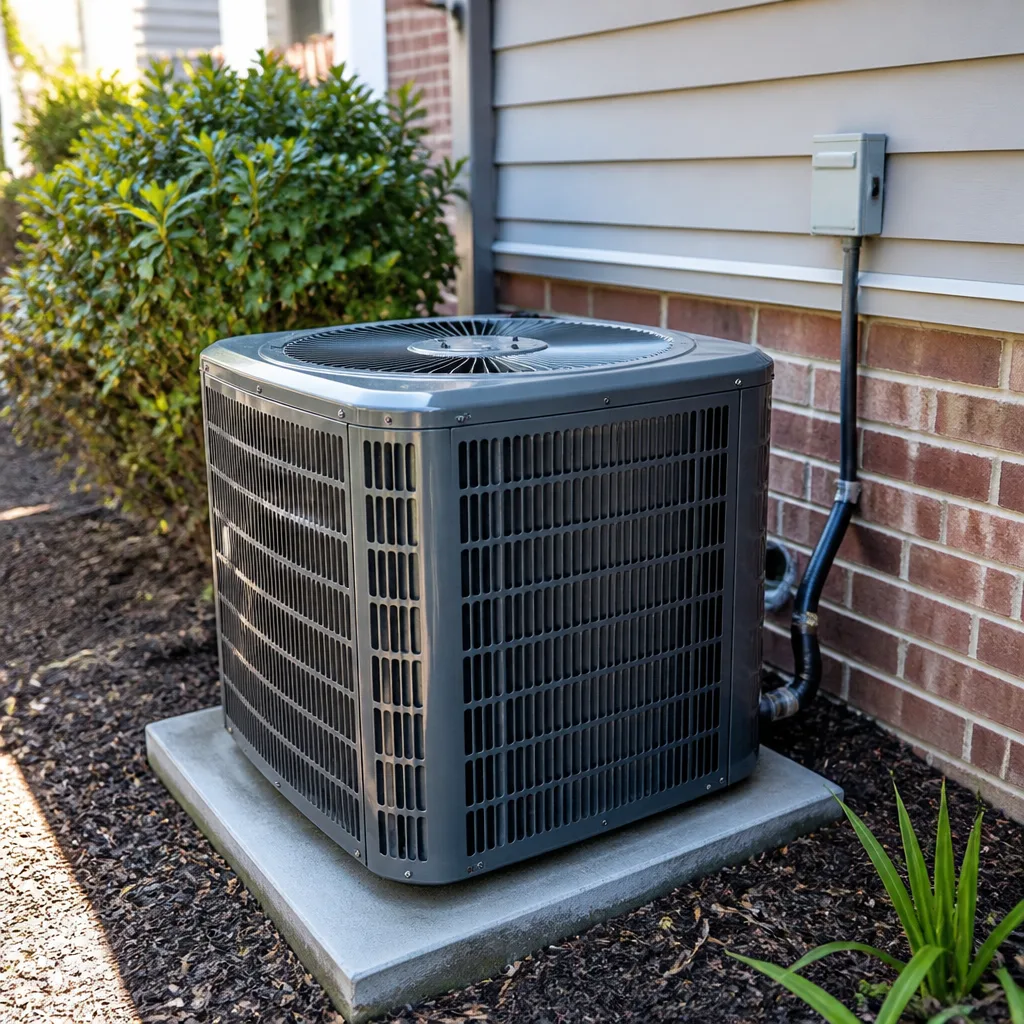 AC repair
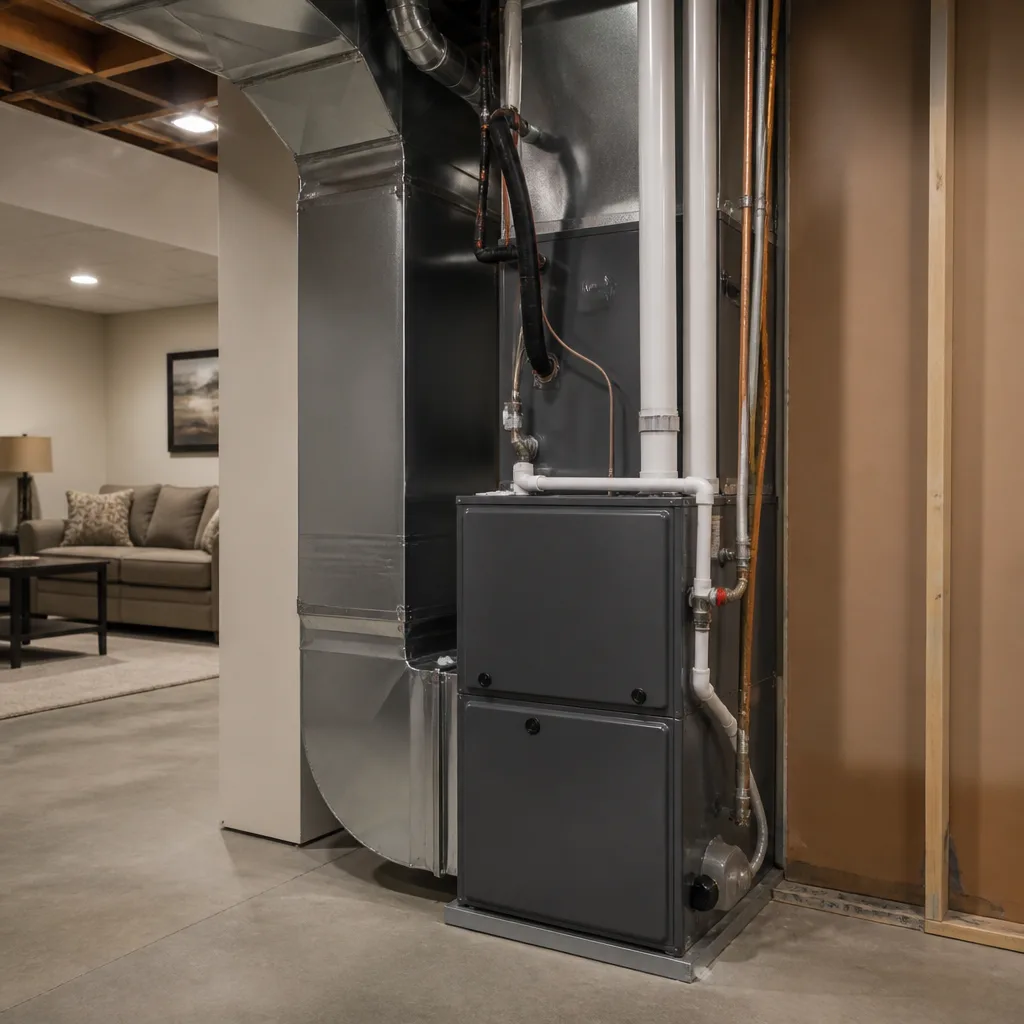 Furnace & heating
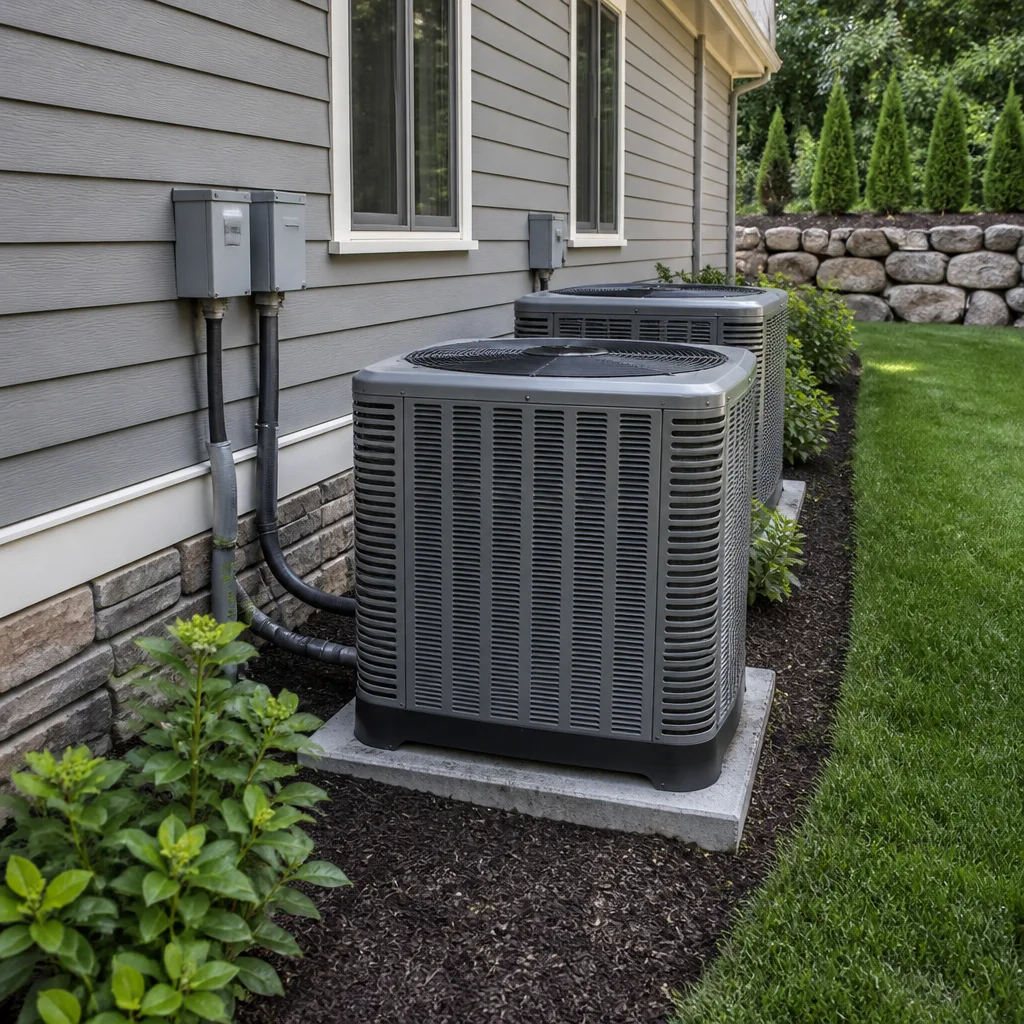 Heat pumps
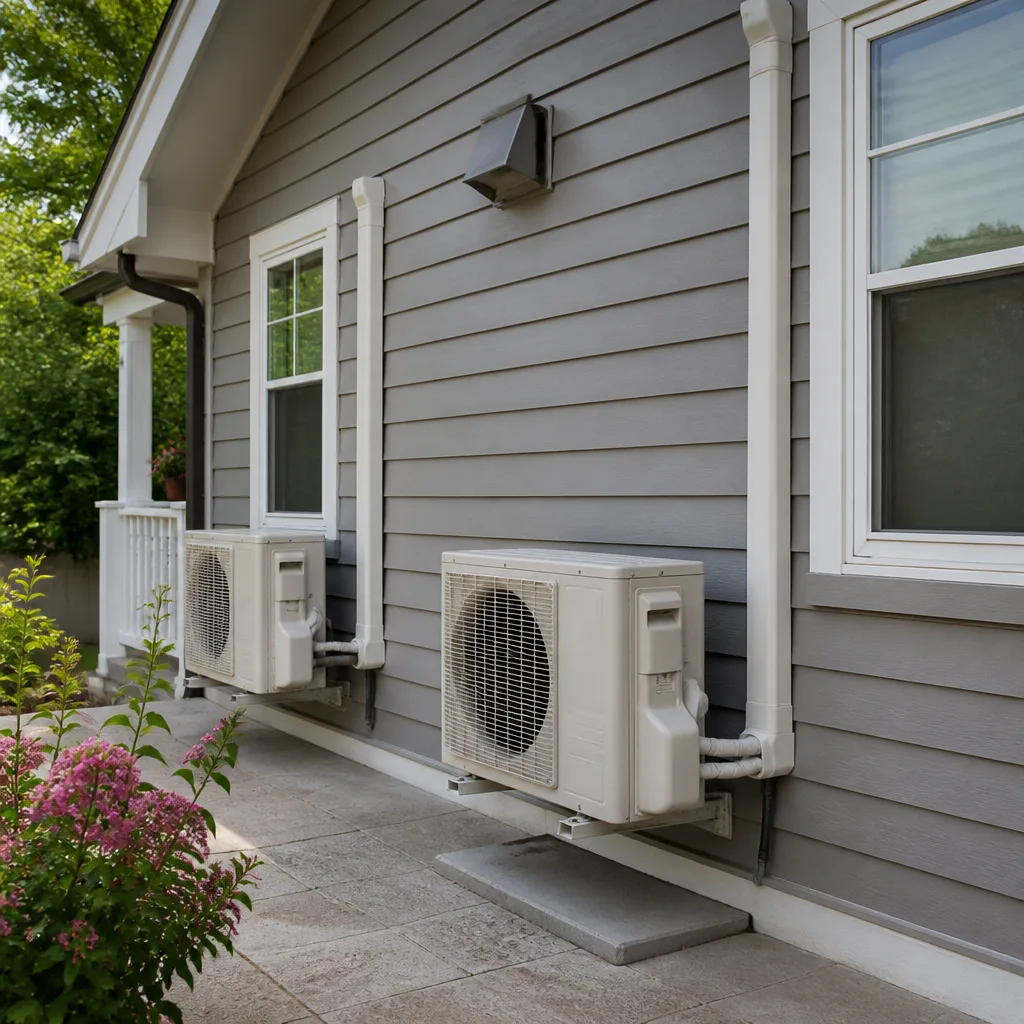 Ductless mini splits
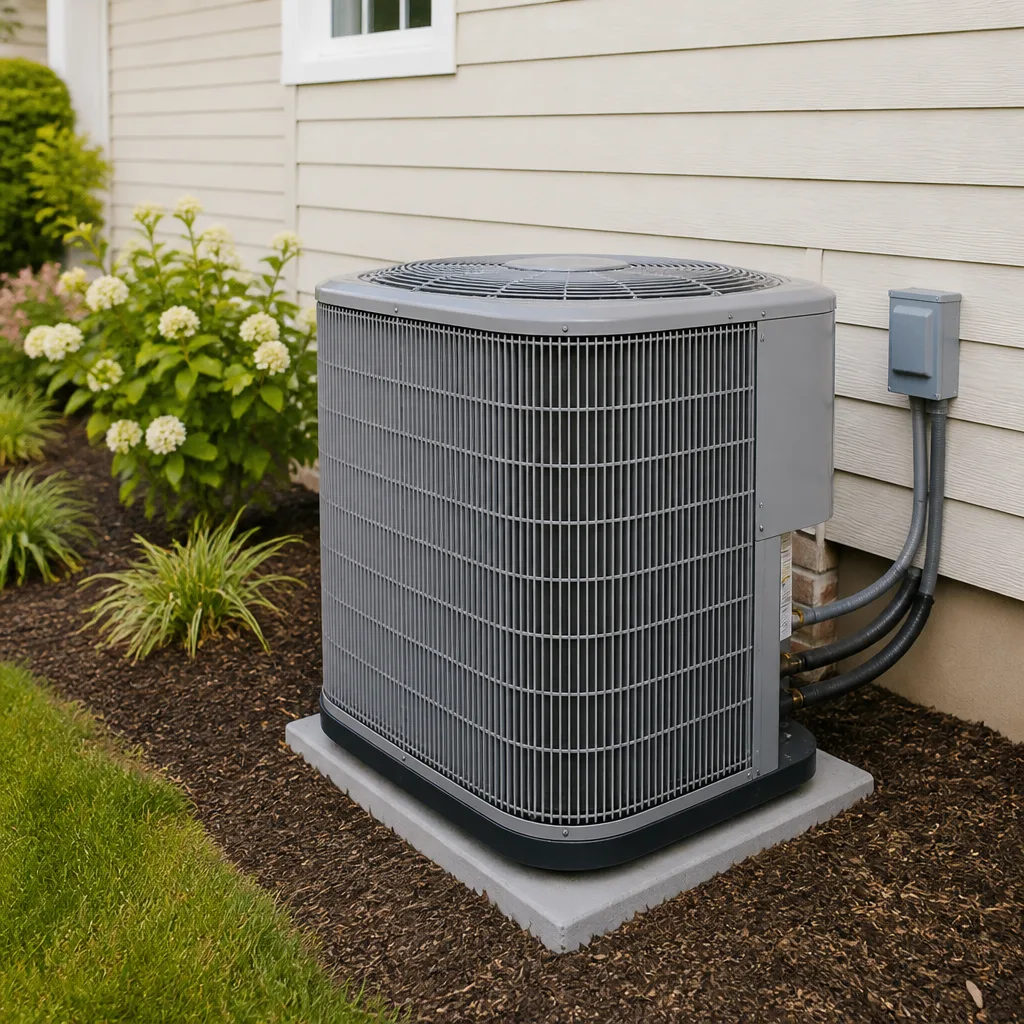 Carrier
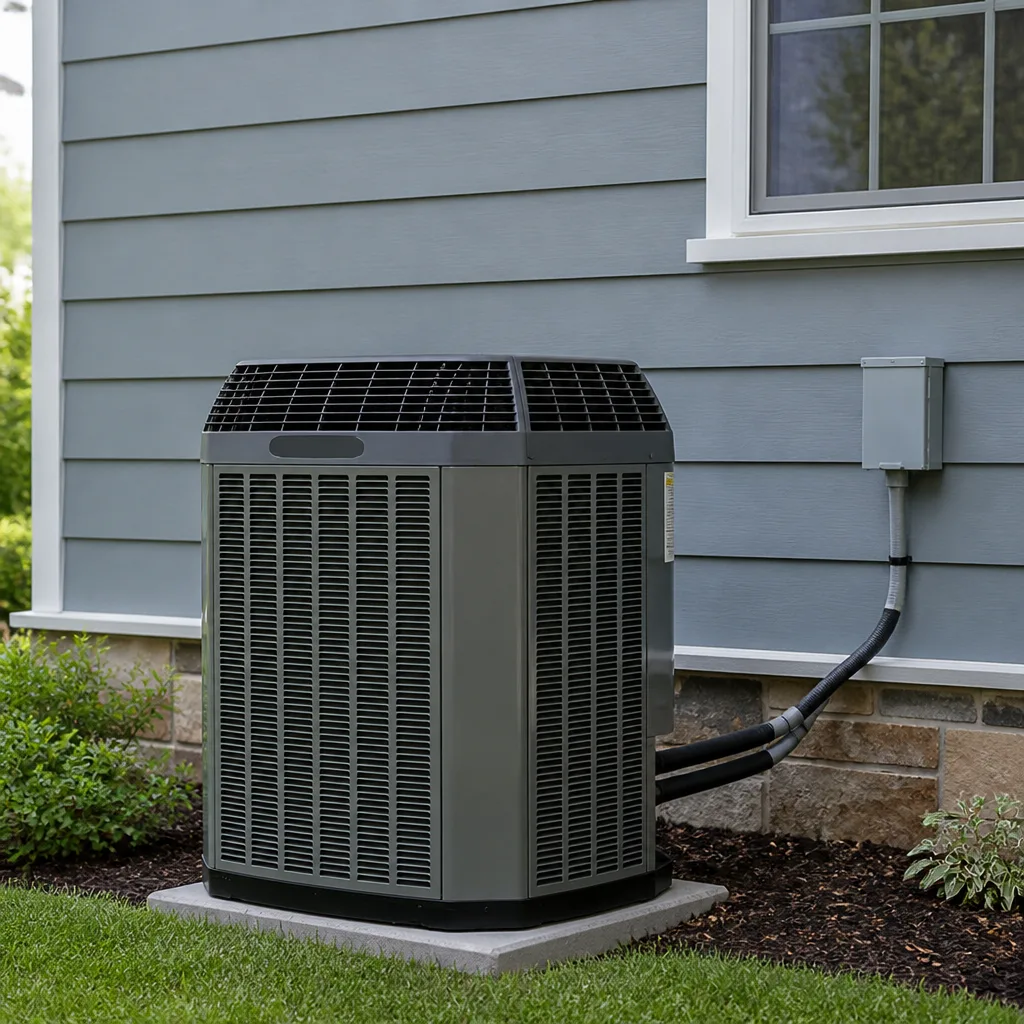 Trane
Trane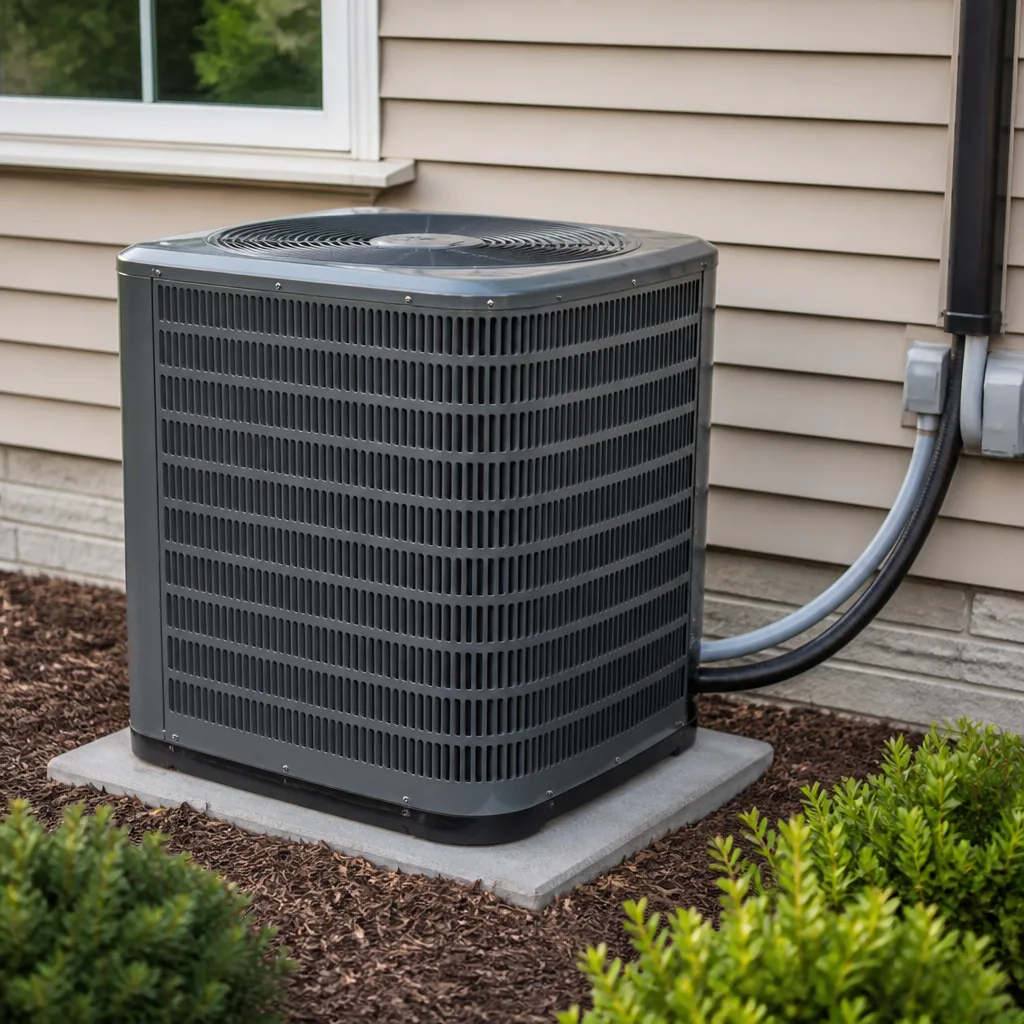 Goodman
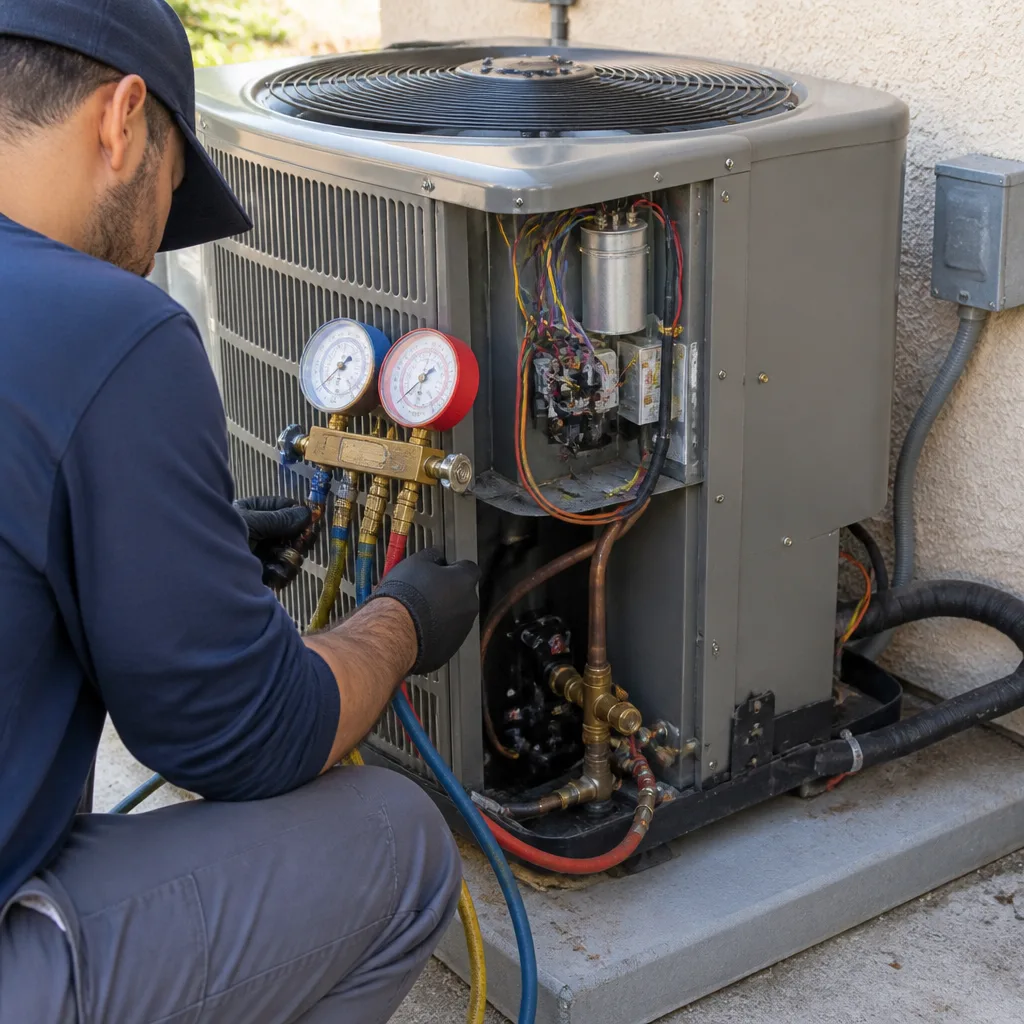
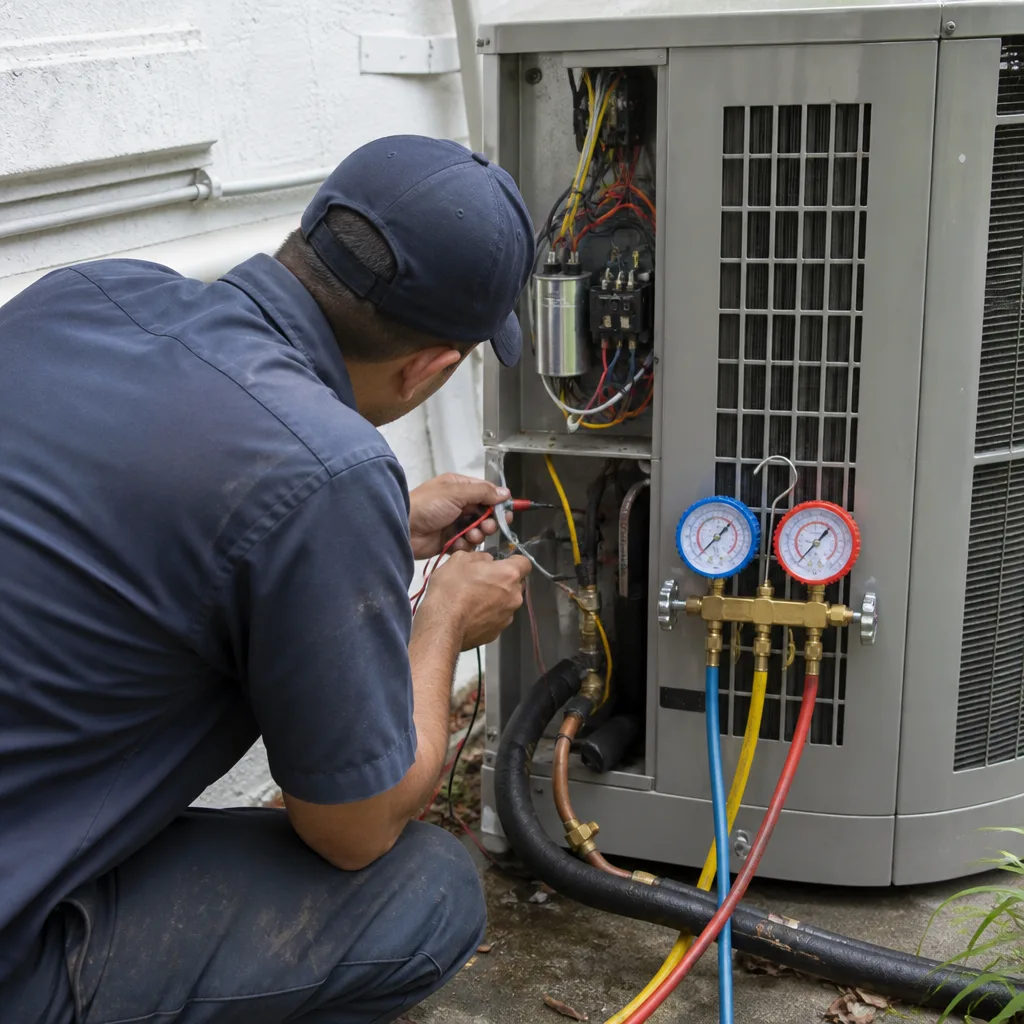
Seasonal tune-up and full diagnostic on your Carrier, Trane, or Goodman system - readings shown to you before any repair is proposed
Diagnosis first, numbers second - you approve the repair price before a single part goes in.
Get your free estimateThe Complete Guide to HVAC in Fort Lauderdale
Fort Lauderdale homeowners run their air conditioning roughly 3,000 hours a year. That’s nearly double what a unit in Atlanta logs, yet most manufacturer warranties were written with a 1,500-hour climate in mind. What that means for you is simple: the advice that works for a homeowner in Ohio or even central Florida doesn’t translate cleanly to Broward County. Salt air eats coils faster here. Cooling loads never really stop. And hurricane season rewrites the rules for what counts as a properly installed system. This guide covers what Fort Lauderdale’s conditions actually demand, from equipment selection to contractor vetting to the repair-versus-replace math, so you can make decisions with your eyes open instead of trusting generic advice that was never built for this city. For more guides & resources on keeping your home comfortable in South Florida, explore our blog.
Quick Answer
The complete picture of HVAC in Fort Lauderdale comes down to four things: coastal salt air accelerates corrosion on coils and condenser fins, so coated coils are worth the upcharge here; the 2023 shift to SEER2 ratings and a 15 SEER2 federal minimum changed what efficiency numbers actually mean; Broward County mechanical permits plus city inspections are mandatory and skipping them can void your homeowner’s insurance; and the rule for repair versus replacement lands differently here because your system runs double the national average hours. A Fort Lauderdale homeowner who understands these four points can buy, maintain, and repair HVAC equipment without getting taken.
Styles & brands we work with
Table of Contents
- Why Salt Air Changes Everything About HVAC in Fort Lauderdale
- SEER vs. SEER2: What the 2023 Standard Shift Means for Fort Lauderdale Homes
- Florida’s Permitting Chain: Why Skipping It Can Void Your Insurance
- How to Choose HVAC Equipment That Survives Fort Lauderdale
- The $5,000 Rule Adjusted for Fort Lauderdale’s Usage Cycle
- What a Written Guarantee Actually Looks Like on a Full System Replacement
- Maintenance Schedules That Match a 12-Month Cooling Season
- What HVAC Work Costs in Fort Lauderdale Right Now
Why Salt Air Changes Everything About HVAC in Fort Lauderdale
If your home sits within three miles of the Atlantic, your outdoor condenser unit is breathing salt-laden air every single day. That’s not a metaphor. Salt particles settle on the aluminum fins of the condenser coil, and when they mix with humidity (which Fort Lauderdale has in abundance roughly 365 days a year), they create a mild electrolytic solution that accelerates corrosion. In practical terms, a condenser coil that might last 15 years in Gainesville or Orlando can start leaking refrigerant in 7 to 9 years in Victoria Park, Rio Vista, or any of the barrier island neighborhoods.
This is the single most under-discussed HVAC issue in Fort Lauderdale, and we see it on service calls constantly. A homeowner in Coral Ridge calls us for warm air blowing, and the diagnosis is almost always a corroded coil that’s lost its refrigerant charge. The fix is either a coil replacement (often $900 to $1,800, depending on the system) or a full condenser replacement when the compressor has been damaged by running low on refrigerant.
The practical defense is a factory-applied or aftermarket coil coating. Two coatings dominate the market: ElectroFin and Blygold. Both create a polymer barrier over the aluminum that salt and moisture can’t easily penetrate. The upcharge for an ElectroFin-coated coil on a new condenser typically runs $150 to $350. For a Blygold dip-and-bake application on an existing coil, expect $400 to $700. Given that a failed coil costs four to five times that to replace, the math favors the coating in Fort Lauderdale specifically. If you were in Jacksonville, we might say skip it. Here, we say the opposite.
Also worth knowing: the coastal corrosion issue applies to more than just the coil. Electrical terminals on the contactor and capacitor rust faster. The condenser fan motor bearings suffer from salt intrusion. And the sheet metal on the unit cabinet itself will show pitting and rust within a few years on an uncoated unit. When you’re choosing equipment for a Fort Lauderdale home, these are the details that separate a system that makes it to 12 years from one that fails at 8.
SEER vs. SEER2: What the 2023 Standard Shift Means for Fort Lauderdale Homes
SEER stands for Seasonal Energy Efficiency Ratio, and SEER2 is the updated testing standard the Department of Energy rolled out in 2023. The difference isn’t just bureaucratic. SEER2 testing measures performance under more realistic conditions, including higher static pressure in the ductwork, which means a unit’s SEER2 number is always lower than its old SEER number even when it’s the exact same physical equipment. A system that was rated 16 SEER under the old standard is typically rated about 15.3 SEER2 under the new one.
The federal minimum shifted at the same time. In the Southeast (including all of Florida), new residential central AC systems and heat pumps must now meet a minimum of 15.0 SEER2. That’s an efficiency level that would have been considered a mid-tier upgrade five years ago. For Fort Lauderdale homeowners, this is actually good news: the floor got higher, which means even a budget replacement installed today will use measurably less electricity than a budget system installed in 2019.
Here’s how to think about it in dollars. A 15 SEER2 system in Fort Lauderdale, running those 3,000 hours a year, will draw somewhere in the neighborhood of 2,500 to 3,000 fewer kilowatt-hours than a 13 SEER unit from 2015. At FPL’s current residential rate (typically 11 to 14 cents per kWh, depending on usage tier), that’s a real savings of $275 to $420 per year. A 17 SEER2 unit, which is the sweet spot for most Fort Lauderdale homes, widens that gap further, and it also qualifies for FPL’s rebate programs when those are active.
One piece of practical advice: don’t pay extra for a very high SEER2 rating (20+) in Fort Lauderdale unless you’re planning to stay in the home for 10 or more years. A 20 SEER2 system costs $3,000 to $5,000 more installed than a 17 SEER2 system, and the incremental electricity savings typically run $80 to $120 a year. You’d need roughly 25 to 40 years to break even. Spend that money on a coated coil and better filtration instead, which are decisions that pay back much faster in this climate.
Florida’s Permitting Chain: Why Skipping It Can Void Your Insurance
Florida’s permitting process for HVAC replacement is stricter and more layered than what most homeowners in other states encounter. Here, you’re dealing with two separate authorities: Broward County issues the mechanical permit, and the City of Fort Lauderdale performs its own inspection on top of that. The process works like this:
- Your contractor files a mechanical permit application with Broward County’s Building Code Services division. This includes the equipment specs, a load calculation (Manual J), and a site plan showing where the condenser will sit.
- Broward County reviews the application and issues the mechanical permit. This typically takes 1 to 5 business days for a straightforward replacement.
- Your contractor installs the system and schedules the City of Fort Lauderdale inspection. The city inspector verifies the equipment matches the permit, the electrical disconnect is properly placed, the condensate drain is routed correctly, and the unit meets wind-load anchoring requirements.
- The inspection passes. Both the county permit and city inspection are then closed out and become part of your property’s permanent record.
That last step matters more than most homeowners realize. If you skip the permit and your system later causes a fire, a water leak, or a mold problem, your homeowner’s insurance company can and often will deny the claim on the grounds that the work was unpermitted. That’s not a hypothetical. We’ve seen it happen in Fort Lauderdale, and it’s a brutally expensive lesson.
Wind-load anchoring deserves particular attention in this city. Fort Lauderdale sits in a High-Velocity Hurricane Zone, and the Florida Building Code requires that outdoor condenser units be anchored to a concrete pad or rooftop curb with hurricane-rated straps or bolts. An unanchored unit becomes a projectile in a Category 3 storm, and it can also rupture the refrigerant lines, which creates an environmental hazard and a costly repair after the weather passes. A proper Fort Lauderdale installation includes these anchors as standard. If a contractor quotes you a replacement that seems suspiciously cheap, ask specifically whether the price includes hurricane anchoring and whether they pull the county permit. The cheap quote is almost always skipping one of the two. Before you hire anyone, read our How to Hire a HVAC Contractor in Fort Lauderdale: A Step-by-Step Guide to protect yourself.
How to Choose HVAC Equipment That Survives Fort Lauderdale
Equipment selection in Fort Lauderdale isn’t about finding the nicest brand. It’s about matching the right components to the specific conditions this city throws at them. We service nine major residential brands, including Trane, Lennox, Goodman, and Rheem, and the honest truth is that all of them make equipment that will work well here if it’s set up correctly. The difference between a 10-year system and a 16-year system in Fort Lauderdale is rarely the brand name on the cabinet. It’s the choices made around the equipment.
Here’s what actually matters for a Fort Lauderdale installation:
- Coated condenser coil. As covered above, ElectroFin or Blygold. This is the single highest-value upgrade for coastal and near-coastal homes. If your home is west of I-95 in Plantation or Sunrise, the corrosion risk is lower and you can reasonably skip it. East of US-1, it should be non-negotiable.
- Proper sizing via Manual J load calculation. Florida homes have very different cooling loads from northern homes, and rule-of-thumb sizing (500 square feet per ton) consistently oversizes systems in Fort Lauderdale because it ignores humidity. An oversized system cools the air quickly but doesn’t run long enough to dehumidify, leaving you with a cold-and-clammy 74 degrees. A Manual J calculation accounts for window area, ceiling height, insulation levels, and the home’s orientation. Insist on it.
- Variable-speed or two-stage compressor. Fort Lauderdale’s humidity problem is best addressed by a system that can run at a lower capacity for longer periods. A variable-speed unit running at 40% capacity for an hour removes significantly more moisture than a single-stage unit cycling on and off. The upcharge for variable-speed is real ($1,500 to $3,500), but it’s the difference between a home that feels comfortable at 76 degrees and one that needs to be set to 71 to feel the same.
- MERV 11 to MERV 13 filtration when the ductwork allows. Fort Lauderdale’s outdoor air carries mold spores, pollen, and salt particulates. A thicker media filter (4 to 5 inches deep rather than the standard 1-inch) improves indoor air quality substantially without choking airflow. We recommend checking the static pressure before upgrading to MERV 13, because restrictive ducts plus restrictive filters equals a system that never reaches its rated efficiency.
- Hurricane pad and anchoring package. Already covered in the permitting section, but worth repeating: the pad should be a composite hurricane pad approved for HVHZ zones, and the anchors should be code-compliant. This is required, not optional.
For most Fort Lauderdale homeowners, our recommendation is a 16 to 17 SEER2 single-stage or two-stage system from a brand your local contractor actually stocks parts for. Trane and Lennox have strong parts availability in Broward County through their distribution networks. Goodman and Rheem are excellent values when the install quality is there. The best system in the world, installed poorly, will underperform a mid-tier system installed correctly. The contractor matters more than the badge.
The $5,000 Rule Adjusted for Fort Lauderdale’s Usage Cycle
The standard HVAC rule of thumb says: multiply the cost of the repair by the age of the system. If the result exceeds $5,000, replace the system instead of repairing it. A $400 repair on a 10-year-old unit equals $4,000, which is under the threshold, so repair. A $600 repair on a 12-year-old unit equals $7,200, which is over, so replace.
That rule was built for climates where a system runs 1,200 to 1,800 hours a year. In Fort Lauderdale, your system is running nearly double that, which means an 8-year-old Fort Lauderdale AC has accumulated the same runtime as a 14-year-old system in Charlotte or Nashville. The rule needs an adjustment, and here’s the version we use with our customers:
- For a Fort Lauderdale system running 2,800+ hours annually, treat the system’s “effective age” as roughly 1.4 times its calendar age. A 9-year-old system in Sunrise has the wear of a 12.5-year-old system in a milder climate.
- Apply the $5,000 rule to that effective age. A $500 repair on a 9-year-old Fort Lauderdale system: $500 × 12.5 effective age = $6,250. That’s over the threshold. Replacement starts to make sense.
- Also factor the salt-air corrosion variable. If the condenser coil is already showing corrosion, any repair you make is a repair on a system with a known terminal condition. The clock is ticking faster than the calendar suggests.
- If the compressor has failed on a system that’s 8 or more years old in Fort Lauderdale, replacement is almost always the right call. Compressor replacement runs $1,800 to $3,200 here, and putting that money into an aging, corroding system that runs 3,000 hours annually is chasing bad money with worse.
The other variable specific to Fort Lauderdale is R-22 refrigerant. If your system was installed before 2010, there’s a decent chance it runs on R-22, which is no longer manufactured or imported in the United States. The only supply is reclaimed and recycled, and the price per pound has risen accordingly. A full R-22 refrigerant recharge in Fort Lauderdale now runs $200 to $300 per pound, and a typical system needs 6 to 10 pounds. That’s $1,200 to $3,000 for a recharge on a system that’s at least 14 years old. In nearly every case, that money is better spent toward a replacement system that uses R-410A or R-454B and meets the new SEER2 minimums.
What a Written Guarantee Actually Looks Like on a Full System Replacement
Most HVAC companies ask you to trust them. They shake your hand, promise the work will be done right, and then leave you with nothing but a receipt. The Kingswell Guarantee works differently, and it’s worth understanding exactly what it looks like when applied to a full system replacement rather than a simple repair. Here are the four written promises, applied to the biggest purchase most Fort Lauderdale homeowners make on their HVAC system:
Price before the work starts. The written quote you receive is the price. Not a starting point, not an estimate that “might need adjustment once we get in there.” The price is delivered on paper before a single tool comes out, and it does not change at the door. If the scope of work changes during the installation, that change is documented and agreed to before the additional work happens. This is a core plank of The Kingswell Way, and it’s applied on every job, from a capacitor replacement to a full system swap.
Firm arrival window. When you schedule the installation, you get a specific window, and the technicians arrive inside it. Not “sometime between 8 and 5.” A real window: “Tuesday, between 9:00 and 11:00.” The team is background-checked and uniformed, so you know exactly who is walking through your door. If something outside our control delays the start, you get a phone call before the window closes.
Clean job site. A full system replacement involves removing old equipment, cutting and fitting new ductwork or line sets, and running new electrical and condensate lines. It’s a messy job. The guarantee says the site is left cleaner than we found it: old equipment removed, debris hauled away, floors swept, and no stray screws, wire clippings, or insulation scraps left behind.
365-day callback on every repair. If any repair fails within 365 days of the work date, we return and correct it at no charge. That’s the 365-Day Done Right Promise, and it’s issued in writing on every repair, not verbally and not conditionally. For a full system replacement, the warranty structure is layered: manufacturer parts warranty (typically 10 years for registered equipment), our workmanship guarantee, and the written repair guarantee on any subsequent repairs.
What this looks like in practice: you know the price, you know when we’re coming, you know the site will be clean, and you know any repair is backed for a full year in writing. No handshake required. That’s the Cold Harbour Heating and Air Fort Lauderdale approach, and it’s been the same since we opened in 2003.
Maintenance Schedules That Match a 12-Month Cooling Season
The standard maintenance advice from manufacturers says “twice a year, once before cooling season and once before heating season.” That advice predates our climate, and it under-serves Fort Lauderdale homeowners. Here, the cooling season is 12 months long, and the “heating season” is a handful of nights in January. Your maintenance schedule needs to account for the fact that your system is compressing refrigerant and moving air on a continuous cycle, with no real offseason.
The schedule we recommend for Fort Lauderdale systems running 2,800+ hours a year:
- Primary condenser and coil service in March. This is the service that catches corrosion early, checks refrigerant charge, cleans the coil fins, and verifies the capacitor and contactor are in good shape before the brutal May-to-September stretch. If a component is marginal, you want to know in March, not when it fails on the first 95-degree day in July.
- Blower and indoor coil service in September. The coil in your air handler is collecting condensation all year, which means it’s the perfect environment for biological growth. This service checks the drain pan and drain line, cleans the coil if needed, and inspects the blower motor and wheel. Fort Lauderdale humidity makes drain line clogs one of the most common service calls we handle; this inspection catches them before they cause a ceiling leak.
- Filter replacement every 45 to 60 days during heavy-use months. If you’re using a 1-inch filter, 60 days is the maximum. If you’ve upgraded to a 4-inch media filter, 6 to 9 months between changes is typical. Any filter left too long in a 3,000-hour system is a filter that’s restricting airflow and making the system work harder than it needs to.
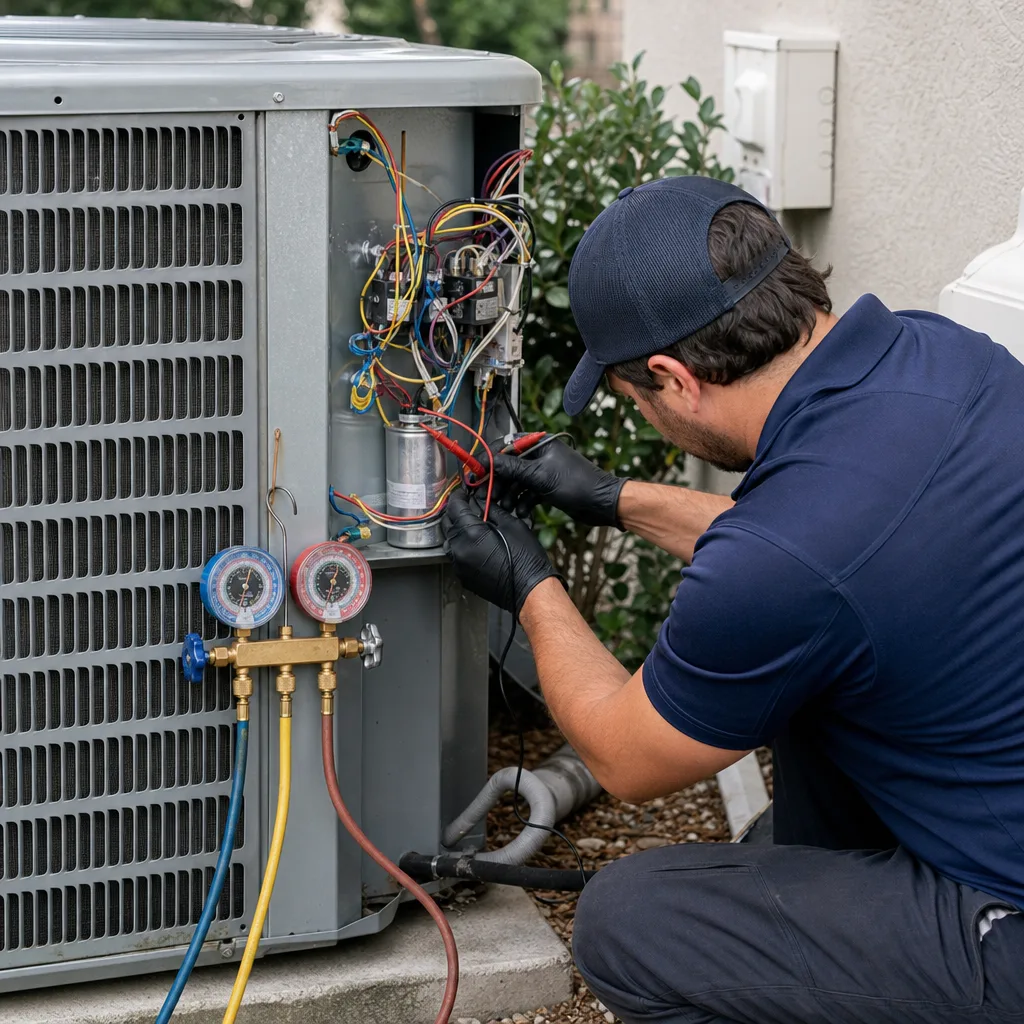
A question we hear often: “Is seasonal maintenance worth it, or is it a way to sell me things I don’t need?” The honest answer is that it depends entirely on the company doing the maintenance. Our technicians are not paid on what they sell, and every maintenance visit ends with a written report of what was found and what, if anything, actually needs attention. If a capacitor tests weak, we’ll show you the reading. If the refrigerant charge is low, we’ll show you the pressure readings and explain where the refrigerant is going. You’re never signing off on work you don’t understand. The maintenance is worth it in Fort Lauderdale specifically because the wear cycle is so aggressive: a system that gets serviced in March and September is a system that fails during business hours, not at 2 a.m. on a holiday weekend in August.
What HVAC Work Costs in Fort Lauderdale Right Now
Pricing transparency is the part of the HVAC industry most companies are least transparent about. Here’s what actual work costs in Fort Lauderdale and Broward County as of 2025, based on the invoices we write every week:
- Diagnostic service call: $79 to $129. Most Fort Lauderdale companies charge in this range for a technician visit and diagnosis. At Cold Harbour, the diagnostic is credited toward the repair if you proceed.
- Capacitor replacement: $150 to $300, parts and labor included. This is the single most common AC repair in Fort Lauderdale, and it’s a 45-minute job for a trained technician.
- Condensate drain line clog: $120 to $250. The humidity in Fort Lauderdale makes this one of our top five service calls. A wet/dry vac and a drain line brush usually solve it in under an hour.
- Refrigerant recharge (R-410A): $150 to $300 for the leak search, then $50 to $90 per pound for the refrigerant itself. If a system needs a recharge, there’s a leak, and the leak needs to be found and repaired. Topping off without finding the leak is throwing money away.
- Blower motor replacement: $500 to $900. Variable-speed motors run higher, $1,100 to $1,800 in some systems.
- Condenser fan motor replacement: $300 to $600.
- Evaporator coil replacement: $900 to $1,800. If the coil is under a parts warranty, you’re paying for the labor and refrigerant only, which drops this to $600 to $1,100.
- Compressor replacement: $1,800 to $3,200. This is the point where replacement math kicks in for any system over 8 years old.
- Full system replacement (15 to 17 SEER2): $8,500 to $14,000 installed, depending on brand, size, and the condition of the existing ductwork. A variable-speed 18 to 20 SEER2 system runs $13,000 to $19,000.
- Ductwork replacement for a 2,000 square foot home: $4,500 to $8,000. Fort Lauderdale’s older homes (1960s and 1970s construction in neighborhoods like Riverland and Croissant Park) often have ductwork that leaks 20 to 30 percent of conditioned air into the attic. Sealing or replacing that ductwork is one of the highest-value efficiency upgrades available in this city.
One point of clarity on the service call: a diagnostic visit is a technician’s time, expertise, and travel to your home. It’s not free, because good technicians don’t work for free, and the companies that advertise $0 service calls are almost always making the money back by inflating the repair price. We charge a transparent diagnostic fee and then apply it toward whatever repair you approve. That way the incentive structure is honest: we want to find the real problem and fix it correctly, not pad a repair to cover a “free” visit.
For AC repair in Fort Lauderdale, our pricing always includes a written estimate before any work begins. The number on the paper is the number on the invoice. If the repair fails inside 365 days, the second visit is free. That’s the 365-Day Done Right Promise, and it’s not an add-on. It’s how every repair we’ve done since 2003 has been handled.
Common Mistakes to Avoid
- Skipping the county permit to save $200. The permit isn’t optional in Fort Lauderdale, and unpermitted HVAC work is a documented insurance risk. The savings evaporate the first time you file a claim tied to the system.
- Replacing a system without a Manual J load calculation. Oversized systems are the most common installation error in Fort Lauderdale, and they result in clammy, sticky air and higher humidity. Any contractor who sizes by “tons per square foot” without measuring the house is guessing.
- Buying the cheapest condenser without a coated coil. The $150 to $350 ElectroFin upgrade is the best insurance policy a coastal Fort Lauderdale homeowner can buy on new equipment. East of US-1, this isn’t really optional.
- Topping off refrigerant without finding the leak. Refrigerant doesn’t get “used up.” If it’s low, it leaked. Topping it off without repairing the leak is a temporary fix on a system that will be back in the same condition in weeks or months.
- Using a 1-inch fiberglass filter and forgetting it for a year. A clogged filter in a 3,000-hour system is a compressor killer. It’s the cheapest component on the system and the one most likely to take down the most expensive component when neglected.
- Waiting for the old unit to fail completely before replacing it. In Fort Lauderdale, failure tends to happen on the hottest day of the year, which is also the day every HVAC company is booked solid. Planned replacement in the fall or spring gets you the best pricing, the best scheduling, and no week of sleeping through a heat wave.
- Taking the lowest bid on a system replacement without checking what’s included. Three quotes: $8,000, $10,500, and $12,000. The $8,000 quote is almost always missing the permit, the hurricane anchoring, the new line set, or the coated coil. Compare line items, not just bottom-line numbers.
See the difference
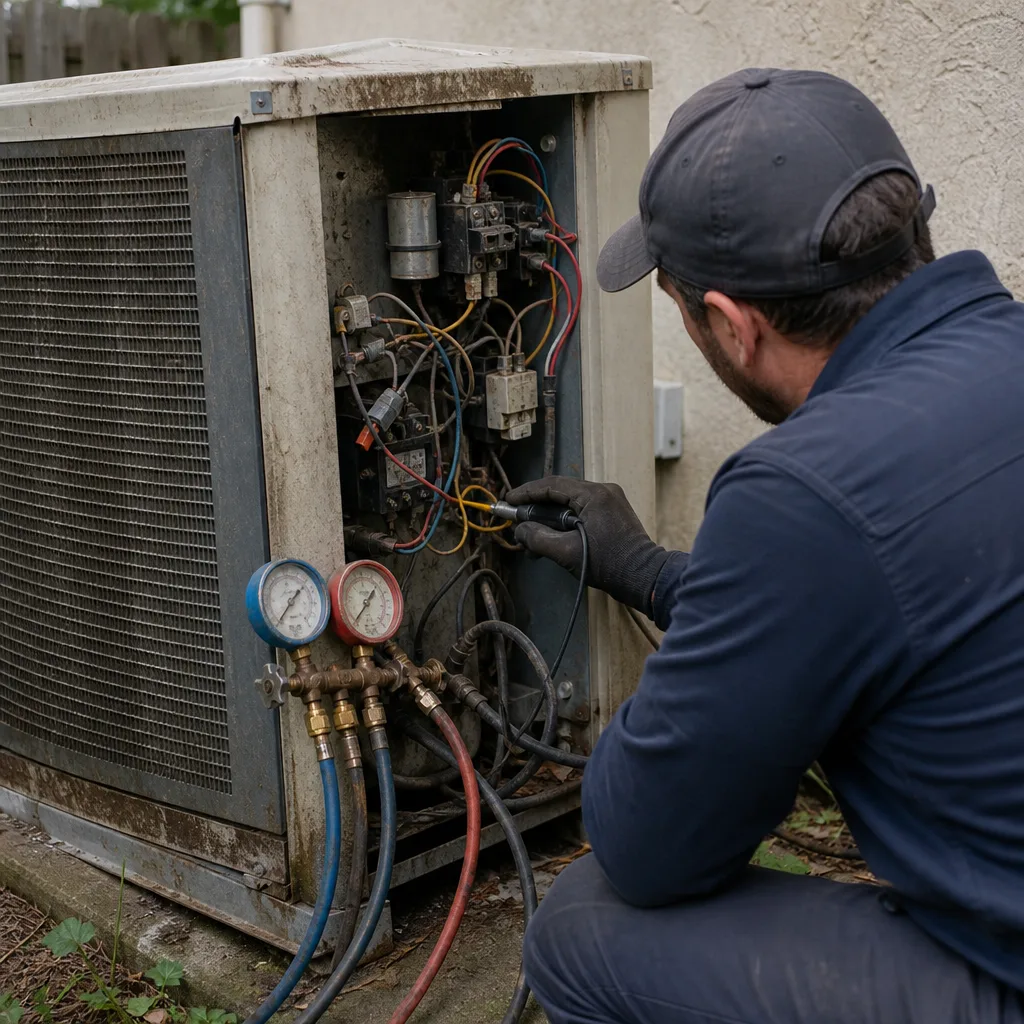 Before
 After
After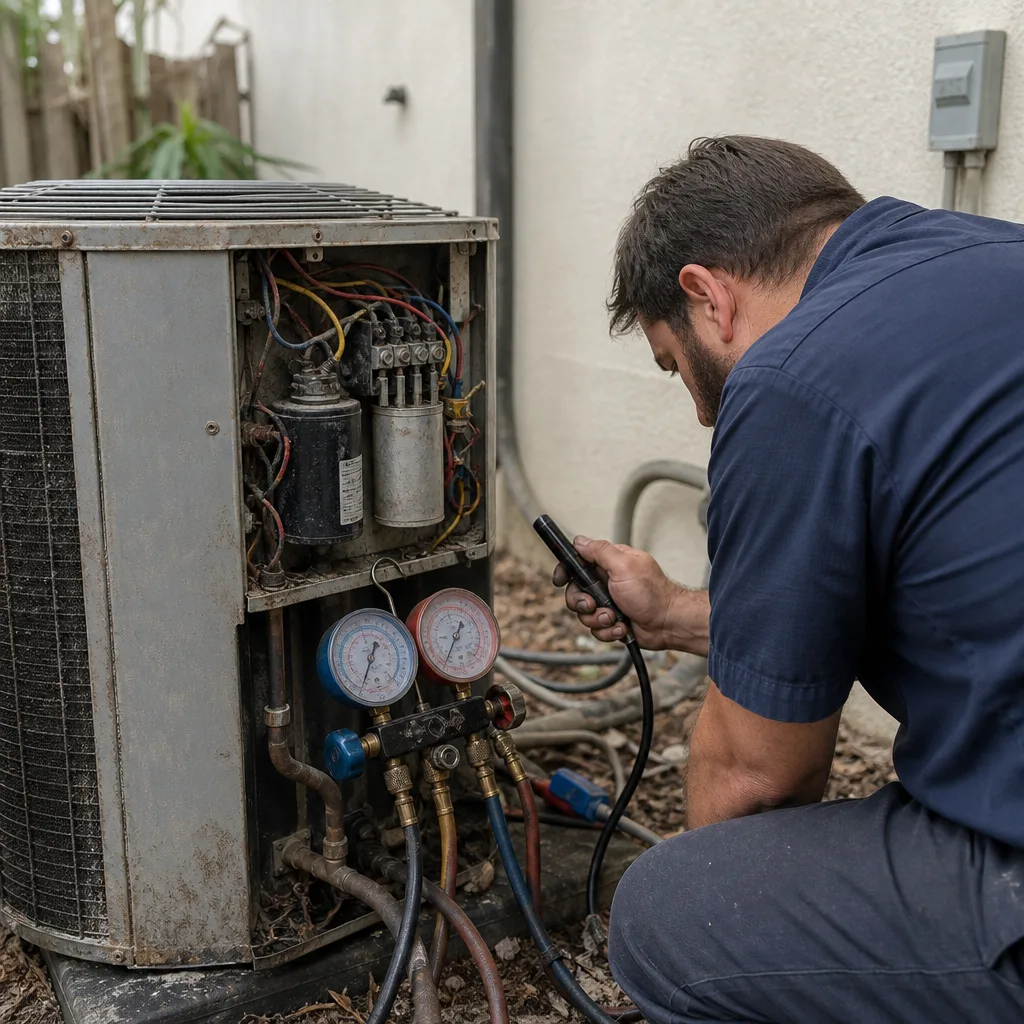 Before
 After
After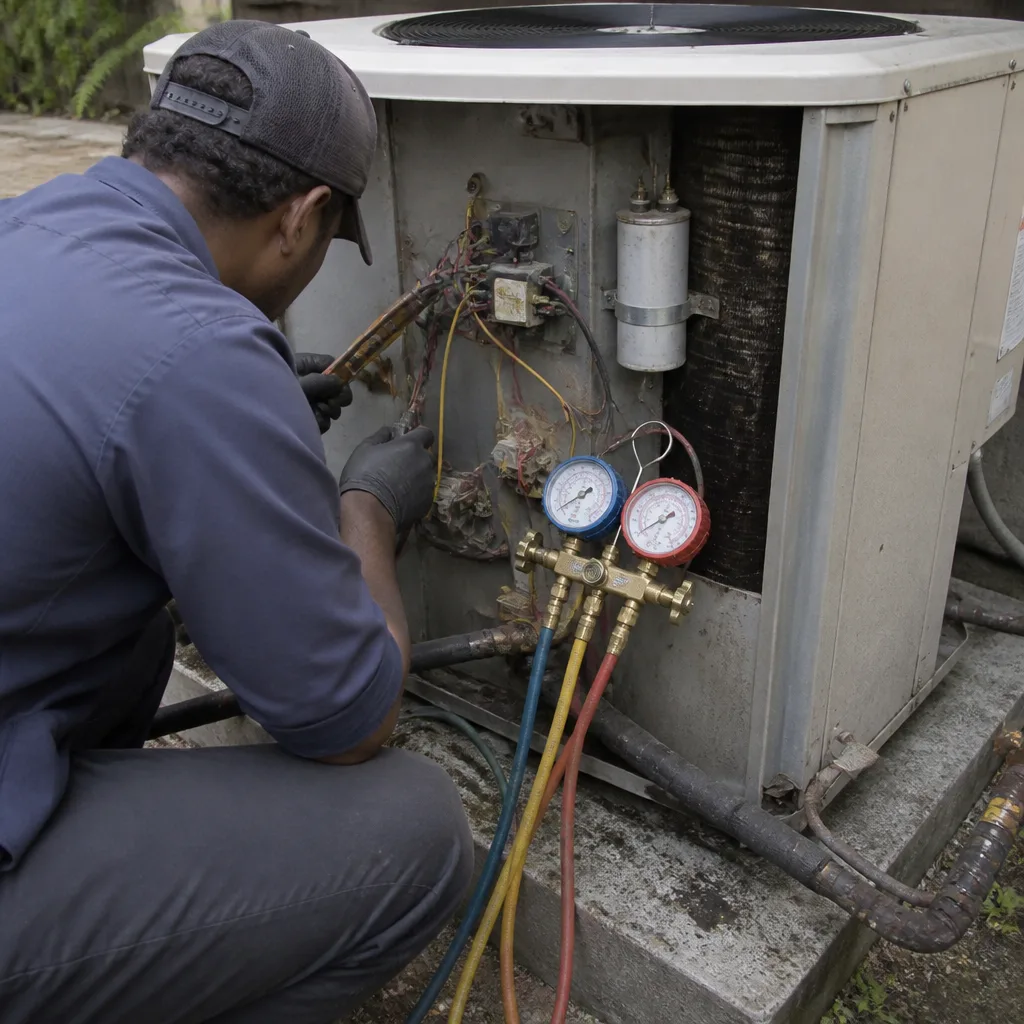 Before
 After
AfterWhen to Call a Professional
There are jobs a homeowner can safely handle in Fort Lauderdale, and there are jobs they absolutely should not. Changing a filter, clearing leaves away from the condenser, and keeping the outdoor unit clear of landscaping are all homeowner-level tasks. For a deeper look at where to draw the line, see our DIY vs Professional HVAC: The Fort Lauderdale Homeowner’s Decision Guide. Anything involving refrigerant, electrical components, or the condensate drain system inside the air handler is a professional job. Refrigerant is pressurized and regulated, capacitors store enough voltage to stop a heart, and a condensate leak that goes unnoticed turns into a drywall and mold problem that costs far more than the service call it would have taken to prevent it. If you’re hearing grinding, squealing, or hissing from your system, or if the air blowing is warm or weak, don’t keep running it and hoping. Turn the system off at the thermostat and call a professional. Cold Harbour Heating and Air Fort Lauderdale offers free estimates in Fort Lauderdale, and a live person answers the phone 24/7 at (754) 354-7289. You’ll get a written price before any work starts, and a written 365-day guarantee on any repair. The Kingswell Way has worked for Fort Lauderdale homeowners since 2003, and it works because we put in writing what other companies only promise.
Frequently Asked Questions
Plan on 10 to 14 years for a well-maintained system in Fort Lauderdale, with coastal homes trending toward the lower end because of salt-air corrosion on the condenser coil. A system that runs 3,000 hours annually accumulates wear roughly 1.4 times faster than the national average, which means the effective lifespan is shorter than the calendar suggests. Systems with coated coils, regular maintenance, and proper installation regularly reach 15 years.
A full central AC system replacement in Fort Lauderdale runs $8,500 to $14,000 for a 15 to 17 SEER2 unit, installed with permit, hurricane anchoring, and a new line set. Variable-speed systems in the 18 to 20 SEER2 range run $13,000 to $19,000. For a detailed breakdown of where every dollar goes, see our HVAC Cost Breakdown: The Fort Lauderdale Homeowner’s Reference for 2026. Ductwork replacement adds $4,500 to $8,000 for a typical 2,000 square foot home. Call (754) 354-7289 for an exact quote on your home; estimates are free and the written price doesn’t change at the door.
Apply the $5,000 rule with the Fort Lauderdale adjustment: multiply the repair cost by the system’s effective age (calendar age × 1.4), and if the result exceeds $5,000, replacement is the better investment. For example, a $500 repair on a 9-year-old Fort Lauderdale system gives you $500 × 12.6, or $6,300, which is over the threshold. Any system over 8 years old with a failed compressor or a corroded coil is almost always a replacement, not a repair.
Yes. Broward County requires a mechanical permit for any HVAC system replacement, and the City of Fort Lauderdale performs a separate inspection. Unpermitted HVAC work can void your homeowner’s insurance claim if the system later causes a fire, flood, or mold problem. A legitimate Fort Lauderdale contractor handles both the permit and the inspection as part of the installation.
SEER2 is the 2023 testing standard that measures efficiency under more realistic operating conditions, including higher duct pressure. A unit’s SEER2 rating is always lower than its old SEER rating even for identical equipment. The federal minimum for new systems in Florida is now 15.0 SEER2.
We service nine major residential HVAC brands: Carrier, Trane, Lennox, Goodman, Rheem, York, Daikin, Bryant, and American Standard. That means the technician who shows up can diagnose and repair whatever system is already in your home, regardless of the brand on the cabinet. Call (754) 354-7289 and a live person will book your appointment.
The Bottom Line
HVAC in Fort Lauderdale isn’t a generic topic, and it shouldn’t be approached with generic advice. The city’s coastal salt air demands coated coils. Its 12-month cooling cycle demands maintenance schedules and replacement math built around 3,000 annual runtime hours, not the 1,500 a northern homeowner experiences. Its permitting chain, with both county and city approvals, demands a contractor who handles the paperwork correctly. And its humidity demands proper sizing and variable-speed equipment that dehumidifies as much as it cools. The homeowners who get the most life and comfort out of their systems aren’t the ones who gamble on the cheapest installation. They’re the ones who buy the right equipment for this climate, maintain it on a Fort Lauderdale schedule, and work with a contractor who puts the price, the window, the cleanup, and the 365-day guarantee in writing. That’s how Cold Harbour Heating and Air Fort Lauderdale has operated since 2003, and it’s the standard we’d recommend to any homeowner in this city regardless of who they hire. If you’re ready for an honest assessment of your system, call (754) 354-7289 for a free estimate. A live person answers, and the price you’re quoted is the price you pay.
Written by Victor Mancini, Owner at Cold Harbour Heating and Air Fort Lauderdale, serving Fort Lauderdale since 2003.