
Last updated October 16, 2026
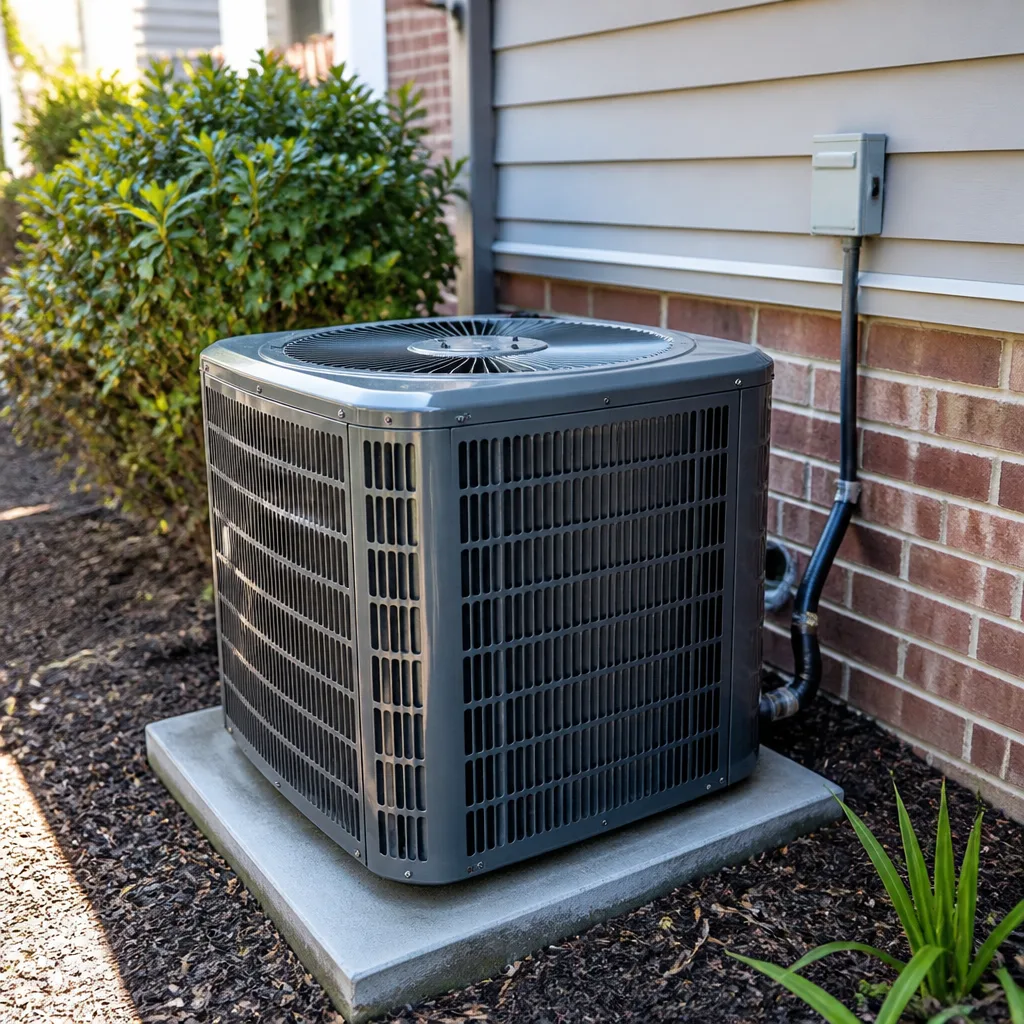 AC repair
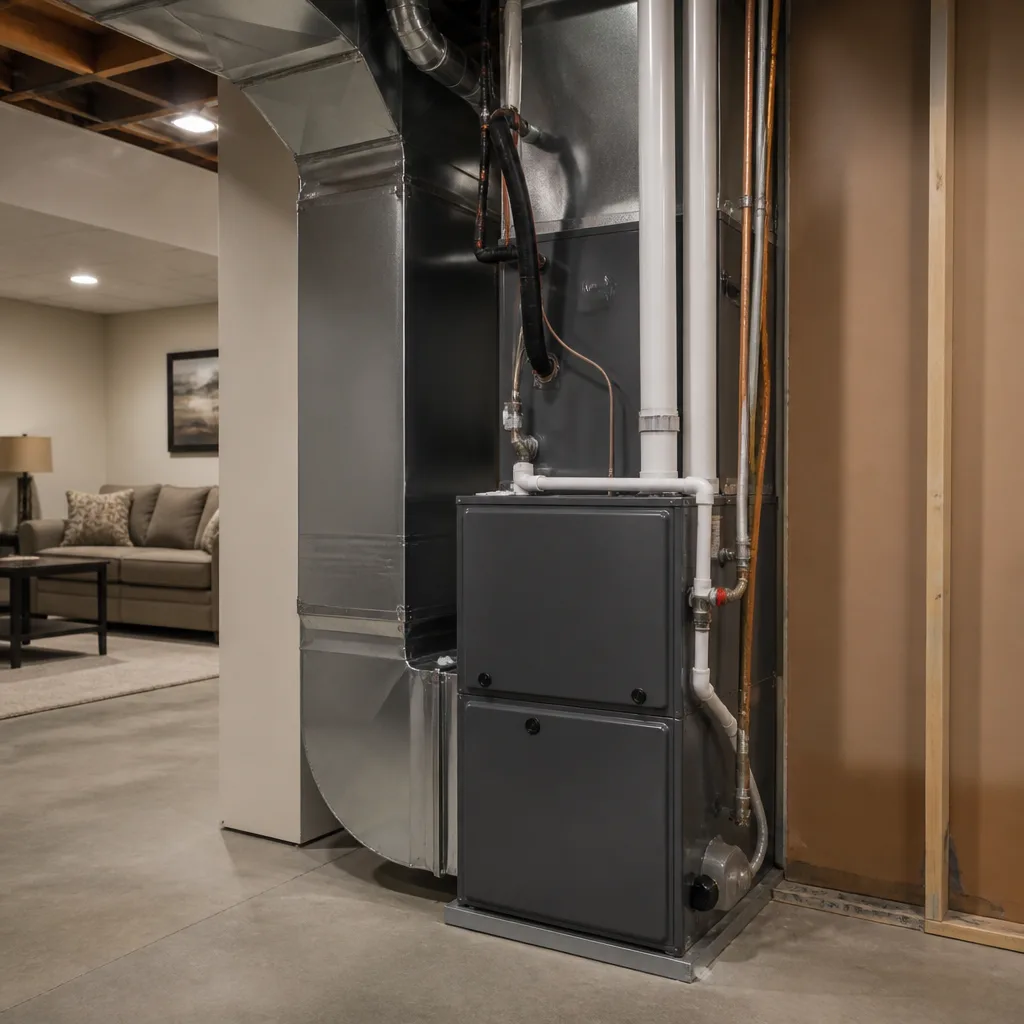 Furnace & heating
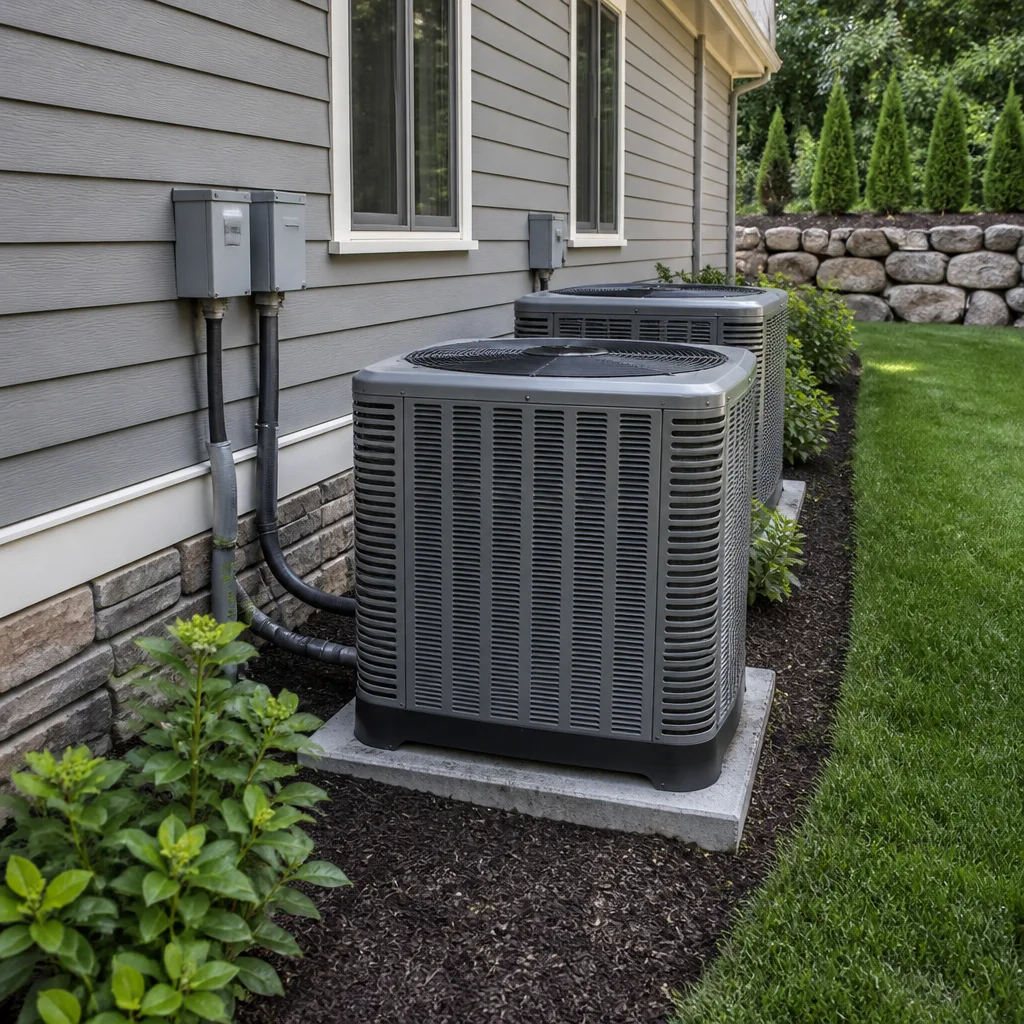 Heat pumps
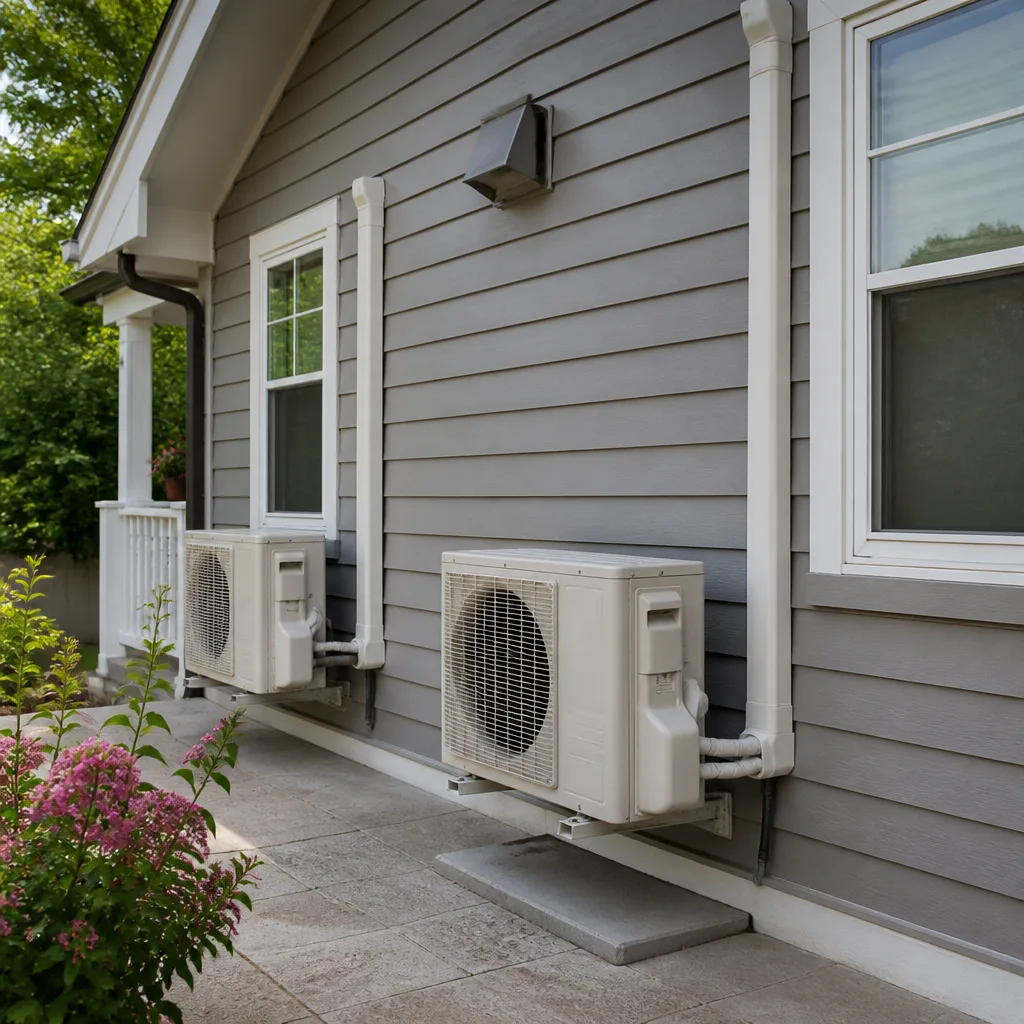 Ductless mini splits
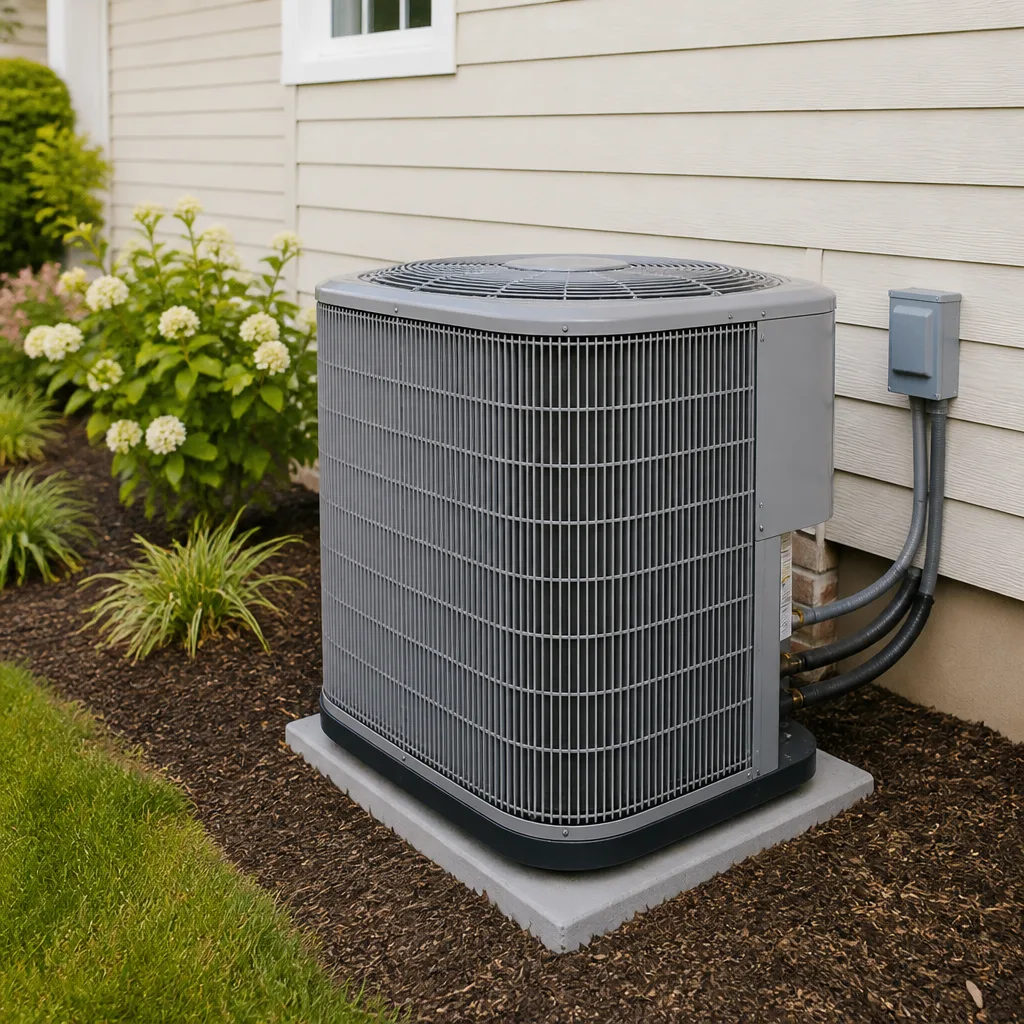 Carrier
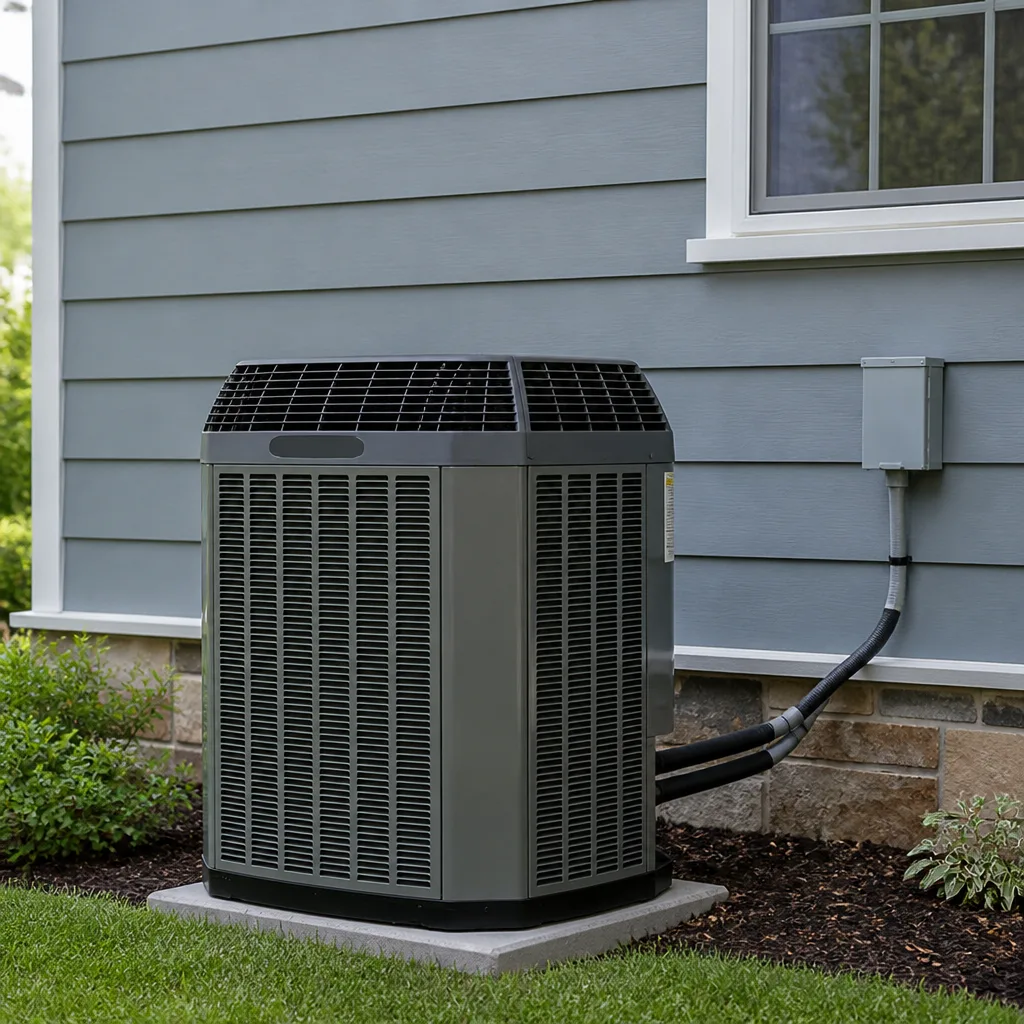 Trane
Trane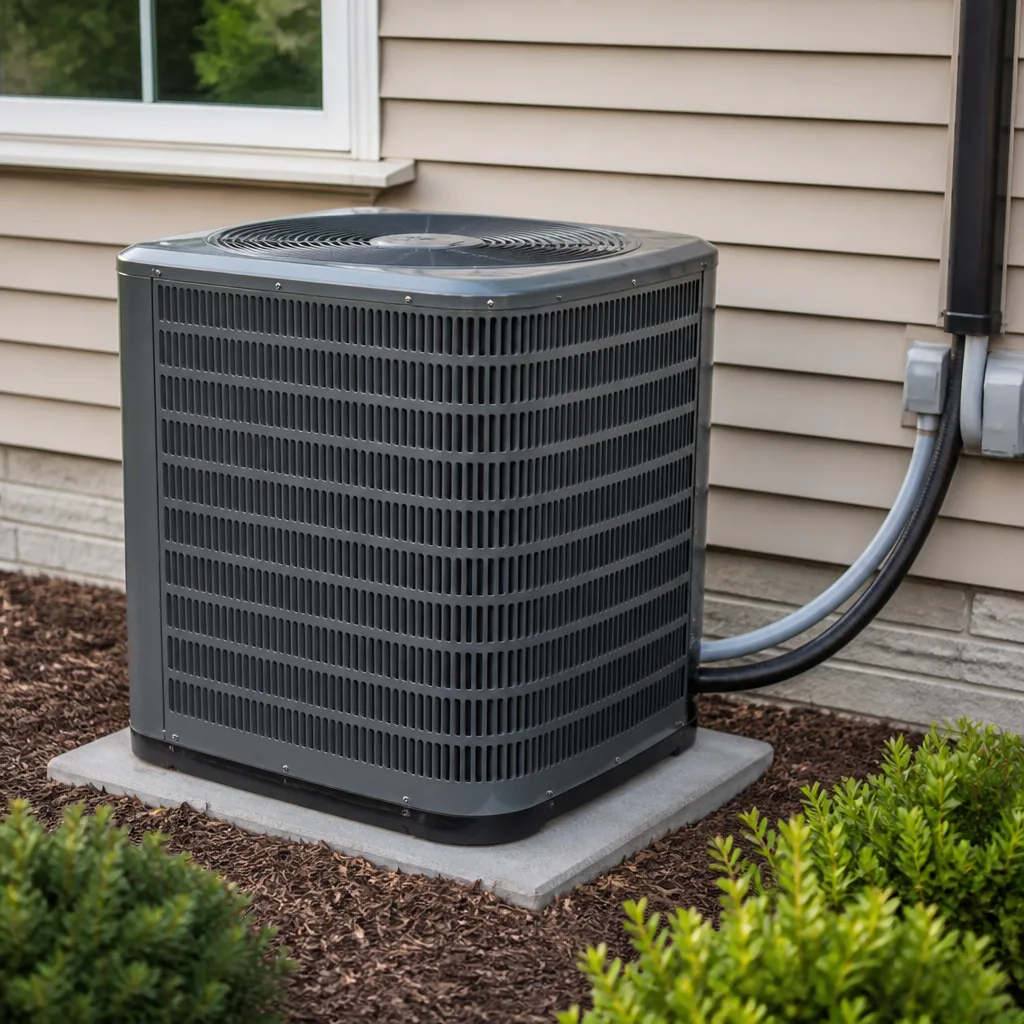 Goodman
Seasonal tune-up and full diagnostic on your Carrier, Trane, or Goodman system - readings shown to you before any repair is proposed
Diagnosis first, numbers second - you approve the repair price before a single part goes in.
Get your free estimateAC Repair Maintenance Checklist for Fort Lauderdale Homeowners
A clogged condensate drain line is the single most common AC service call in Fort Lauderdale from June through September, and it’s almost entirely preventable with a $4 bottle of distilled white vinegar once a month. That’s the frustrating part: most of what goes wrong with a South Florida air conditioner isn’t a mystery breakdown. It’s neglect of three or four simple tasks that generic maintenance checklists either skip or get wrong.
This guide is written specifically for Fort Lauderdale’s climate, not a generic one-size-fits-all list. You’ll learn the month-by-month tasks that actually matter here: how often to flush your drain line, how to check the refrigerant line insulation that our sun destroys, what salt air does to your outdoor coil, and which tasks you can safely do yourself versus which ones need a licensed technician’s hands and gauges. By the end, you’ll have a maintenance routine that keeps your system running through hurricane-season humidity without a midsummer breakdown.
Quick Answer
The most important AC maintenance tasks for Fort Lauderdale homeowners are flushing the condensate drain line with distilled white vinegar monthly from June through September, rinsing the outdoor coil with low-pressure water every 60 days to remove salt and debris, checking refrigerant line insulation for UV damage each spring, and replacing the air filter every 30 to 60 days. A professional tune-up before summer begins in March or April, available through our AC Repair services, catches the issues that cause 80 percent of Fort Lauderdale AC breakdowns: low refrigerant, failing capacitors, and corroded electrical connections.
Styles & brands we work with
Table of Contents
- The Fort Lauderdale Month-by-Month Maintenance Calendar
- The Condensate Drain Line: Fort Lauderdale’s Most Common AC Failure
- Refrigerant Line Insulation: What South Florida Sun Actually Does
- The Salt-Air Outdoor Coil Rinse Protocol
- What You Can Check Yourself vs. What Needs a Licensed Technician
- What a Professional Fort Lauderdale Tune-Up Should Include
- Common Mistakes to Avoid
- When to Call a Professional
- Frequently Asked Questions
The Fort Lauderdale Month-by-Month Maintenance Calendar
Fort Lauderdale doesn’t have four seasons. It has three: the brief mild window from November through February, the pre-summer ramp-up in March and April, and the brutal humidity gauntlet from June through September. Your maintenance schedule should match those rhythms, not some national calendar built around furnace season.
March and April: Pre-Summer Preparation
This is the most important maintenance window of the year in Broward County. Your system has been cycling less often through the mild winter, and the first real heat wave will expose every weak point. Here’s what needs to happen before the humidity arrives:
- Schedule a professional tune-up. This should happen every March or early April, before the first stretch of 90-degree days. A technician checks refrigerant charge, capacitor health, contactor wear, and electrical connections. These are the components that fail under sustained summer load.
- Replace the air filter. Even if you changed it in February, start the summer with a fresh one. A dirty filter in high humidity forces the evaporator coil to work harder, which drops coil temperature and can cause freezing.
- Inspect the condensate drain line. Look at the PVC pipe near your air handler. If you see algae growth or standing water in the line, flush it now and again in May.
- Check the outdoor coil for winter salt and debris accumulation. Even without summer storms, salt in the air settles on coil fins. A rinse now prevents corrosion from setting in before the rainy season.
- Verify the thermostat is reading accurately. If your thermostat sensor has drifted, your entire system will run inefficiently all summer. Compare the thermostat reading against a separate thermometer in the same room.
June Through September: Peak Humidity Survival
This is when Fort Lauderdale AC systems earn their keep. The average dew point from June through September sits above 74 degrees, which means your AC is removing gallons of moisture from the air every single day. Two tasks matter more than anything else during this window:
- Flush the condensate drain line monthly. More on this below, but the short version is: one cup of distilled white vinegar, poured slowly down the drain line access point, once a month. It prevents the algae and sludge buildup that causes the most common summer service call in Fort Lauderdale.
- Check the air filter every 30 days. In peak humidity, a filter can load up faster than the manufacturer’s suggested interval. If it looks dirty at 30 days, replace it. Don’t wait until 60 or 90.
November Through February: The Brief Mild Window
Your AC runs less during these months, which doesn’t mean you can ignore it. This is the right time for deferred maintenance and for keeping an eye on components that age even when idle:
- Rinse the outdoor coil after fall storms. Leaves, salt spray, and wind-blown debris accumulate on the fins. A low-pressure rinse now prevents corrosion from having months to work.
- Inspect refrigerant line insulation. The sun is less intense, which makes this a comfortable time to walk the line and check for cracks, gaps, or missing sections. Repair now, before summer sun turns a small gap into a major efficiency loss.
- Run the system for 20 minutes every two weeks. Even in mild weather, short cycles keep seals lubricated, prevent refrigerant from settling in the wrong places, and reveal problems while they’re still small.
- Schedule any non-urgent repairs. Technicians have more flexible schedules in this window. If you noticed a strange noise in September and limped through, get it fixed now instead of in June.
The Condensate Drain Line: Fort Lauderdale’s Most Common AC Failure
In our experience servicing Fort Lauderdale homes since 2003, the clogged condensate drain line is the call we make most often between Memorial Day and Labor Day. The reason is simple biology and physics: your AC pulls warm, humid air across a cold coil, which condenses moisture out of the air. In Fort Lauderdale’s climate, a properly functioning system can remove 5 to 20 gallons of water per day. That water flows through a PVC pipe to a drain or outside. The inside of that pipe is dark, wet, and warm, which is exactly the environment where algae and mold thrive.
The standard national advice is to pour bleach down the drain line. Here’s what most checklists get wrong: household bleach kills surface growth temporarily, but it moves through the line too quickly to break down the biofilm that’s already adhered to the pipe walls. Within a week or two, the algae is back. Bleach also degrades PVC over repeated exposure and can corrode the metal drain pan if it backs up.
The Correct Fort Lauderdale Drain Line Protocol
- Locate the drain line access point. This is usually a vertical PVC pipe with a cap near the indoor air handler, or a T-fitting in the drain line itself. In many Fort Lauderdale homes, the air handler is in a closet, garage, or attic.
- Pour one cup of distilled white vinegar slowly down the line. Vinegar is acidic enough to inhibit algae and mold growth but won’t damage PVC the way repeated bleach exposure does. Let it sit in the line rather than flushing it immediately.
- Wait 30 minutes, then flush with one quart of warm water. This pushes the vinegar through the line and clears loosened debris.
- Repeat monthly from June through September. This is the maintenance interval that matches Fort Lauderdale’s peak humidity. During the mild months, every 6 to 8 weeks is sufficient.
- If water backs up or drains slowly, call a technician. A fully clogged line can overflow into your drain pan, which can overflow into your ceiling or closet. Once a line is fully blocked, vinegar won’t clear it. A technician uses compressed air or a wet-dry vacuum to remove the blockage.
The cost of prevention is about $4 per month. The cost of a drain line clog that overflows into a finished ceiling in a Fort Lauderdale home can run into the thousands. That math is not complicated.
Refrigerant Line Insulation: What South Florida Sun Actually Does
The copper line that carries refrigerant between your indoor and outdoor units is covered in foam insulation. That insulation isn’t cosmetic. It prevents the cold suction line from sweating and losing cooling capacity to the ambient air. In Fort Lauderdale, that insulation has two enemies: ultraviolet radiation from the sun and the constant moisture that promotes breakdown of the foam’s structure.
What we see on service calls across Fort Lauderdale, from Victoria Park to Coral Ridge to Riverland, is insulation that looks fine from a distance but has hairline cracks, gaps at joints, or sections that have turned brittle and begun flaking. The UV damage happens slowly, and most homeowners never look at the line until a problem develops.
How to Inspect Your Refrigerant Line Insulation
- Walk the line from the outdoor unit to where it enters the house. Look for any section where copper is visible through cracks, gaps, or missing insulation.
- Press the insulation gently with your thumb. Healthy insulation springs back. UV-damaged insulation feels brittle, crumbly, or powdery.
- Check the joints where insulation sections meet. These are the most common failure points. Even a one-inch gap on the suction line can cause condensation, which drips and creates another problem.
- Look for dark spots or mold on the insulation surface. This signals that the insulation is saturated and no longer doing its job.
The efficiency cost of damaged insulation is real but often invisible on your monthly bill. The suction line carries refrigerant at roughly 40 degrees, and when insulation fails, that cold is lost to the outdoor air before it ever reaches your coil. Your system runs longer to compensate. In a Fort Lauderdale summer, that’s an added load every single afternoon. Replacing damaged insulation is a low-cost repair relative to the wear it prevents, and it’s one of the items we check on every AC repair in Fort Lauderdale and maintenance visit.
The Salt-Air Outdoor Coil Rinse Protocol
Fort Lauderdale sits on the Atlantic coast, and the outdoor condenser coil on your AC unit is exposed to salt air every day of the year. Salt is corrosive. When it settles on the aluminum fins of your outdoor coil, it attracts moisture, which accelerates corrosion. Left unchecked, that corrosion eats away at the fins, reducing the coil’s ability to release heat. The compressor works harder, runs hotter, and fails sooner.
This is not a hypothetical. We see condenser coils in Fort Lauderdale that look ten years older than identical units installed inland in Plantation or Sunrise. The difference is salt exposure and whether the homeowner ever rinsed the coil.
The Rinse Protocol
- Turn off the system at the thermostat and at the outdoor disconnect switch. This is a hard rule. Never rinse a coil with the system running.
- Set your garden hose nozzle to a gentle fan or spray setting. Low pressure is critical. The fins on an outdoor coil are thin aluminum, and a high-pressure jet will bend them flat, which is worse than the salt you’re removing.
- Spray from the inside out. If possible, remove the outer guard and spray from the inside of the unit outward. This pushes debris and salt the same direction it entered, rather than forcing it deeper into the fins.
- Aim straight at the fins, not at an angle. Angled spray bends fins. Straight-on spray passes through without damage.
- Rinse until the water runs clear. This usually takes 3 to 5 minutes for a typical residential unit.
- Let the unit dry completely before restoring power. Thirty minutes is generally sufficient in Fort Lauderdale’s heat.
When Rinsing Alone Isn’t Enough
If the coil has visible white crust, green corrosion, or built-up grime that water alone won’t remove, the coil needs a dedicated coil cleaning solution. This is a chemical cleaner formulated to break down salt deposits and organic buildup without damaging the aluminum. In our experience, this is a technician-level task for most homeowners: the wrong concentration can damage the coil or leave residue that actually attracts more debris. We include coil inspection and cleaning, when needed, as part of our standard maintenance visits.
A good rule of thumb for Fort Lauderdale: rinse the coil every 60 days year-round, and have it professionally cleaned once per year if your home is within two miles of the coast. Homes west of I-95 can usually extend the professional cleaning interval to every 18 months.
What You Can Check Yourself vs. What Needs a Licensed Technician
Some maintenance tasks are safe and straightforward for a homeowner. Others involve electrical components, refrigerant, or high-voltage wiring and should only be handled by a licensed professional. Here’s the honest split, based on what we actually see in Fort Lauderdale homes:
Safe to Do Yourself
- Air filter replacement. Locate the filter slot, note the direction arrow on the filter frame, slide the old one out, and slide the new one in. The only thing to get right is the airflow direction.
- Condensate drain line vinegar flush. Described above. Simple, safe, and the highest-value maintenance task in Fort Lauderdale.
- Outdoor coil rinse with water only. As long as the system is off and you use low pressure, this is safe and effective.
- Thermostat battery replacement. If your thermostat display is dim or unresponsive, check the batteries before calling anyone. This solves more “AC won’t turn on” calls than most homeowners would believe.
- Visual inspection of the outdoor unit. Look for debris, vegetation growing within two feet of the unit, bent fins, odd noises, or frost on the refrigerant lines. You’re not fixing anything, just noting what you see.
- Refrigerant level checks and recharging. Refrigerant work is regulated by the EPA. It requires specialized gauges and a license to handle. A low charge is a symptom of a leak, not a maintenance item, and adding refrigerant without finding the leak is throwing money away.
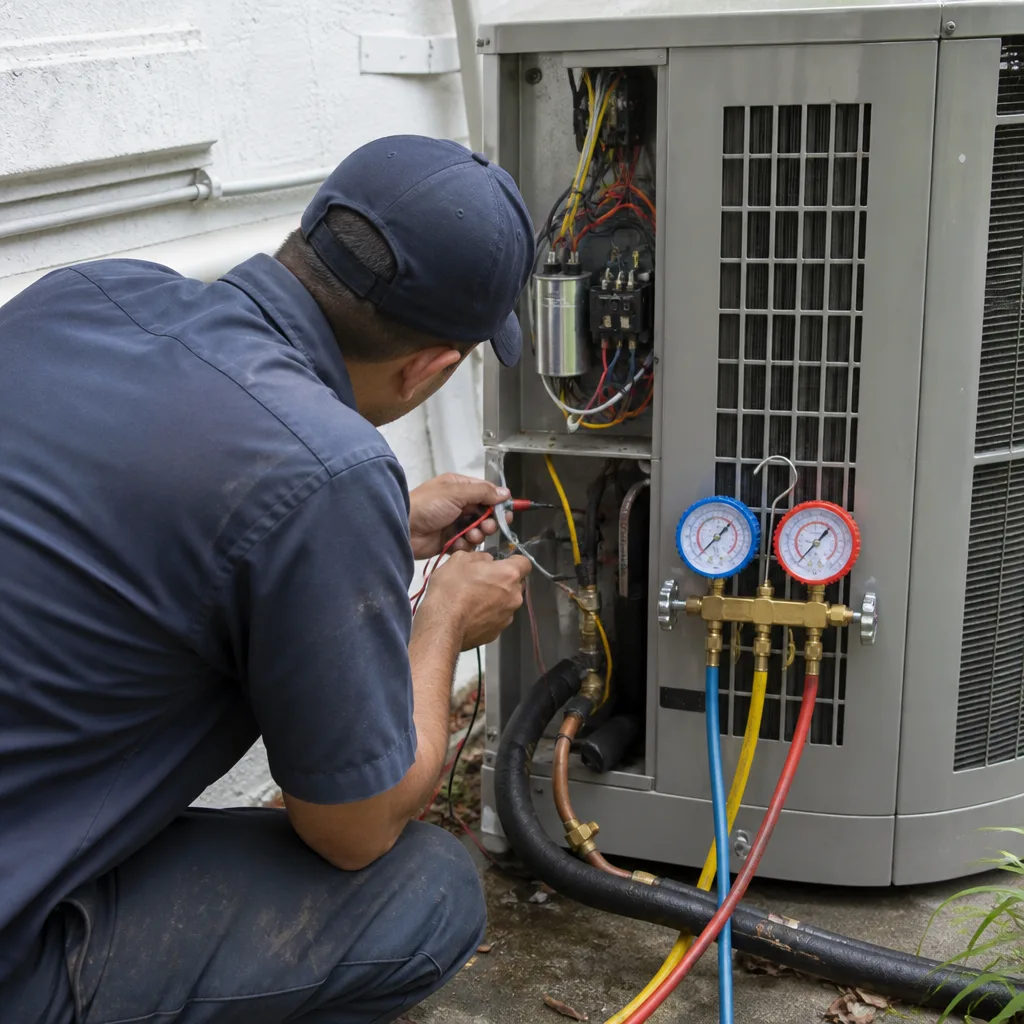
- Electrical component testing and replacement. Capacitors, contactors, relays, and circuit boards all carry high voltage even when the system is off. A failing capacitor is the single most common cause of a Fort Lauderdale AC that won’t start in summer.
- Condenser coil chemical cleaning. As noted above, the chemicals and techniques involved are best left to someone who works with them regularly.
- Blower motor and fan motor work. These components are under tension and carry electrical load. A visibly failing motor needs professional replacement, not homeowner adjustment.
- Anything involving the compressor. The compressor is the heart of the system and the most expensive component to replace. If you suspect compressor issues, stop running the system and call a technician.
- Air filter inspection and replacement if needed. We check it on every visit, even if you just changed it.
- Thermostat calibration check. We verify the temperature reading against a separate instrument and make sure the system is cycling properly at the set point.
- Electrical connection inspection and tightening. Loose connections create resistance, resistance creates heat, heat creates failures. This is a capacitor-killer in Fort Lauderdale’s summer.
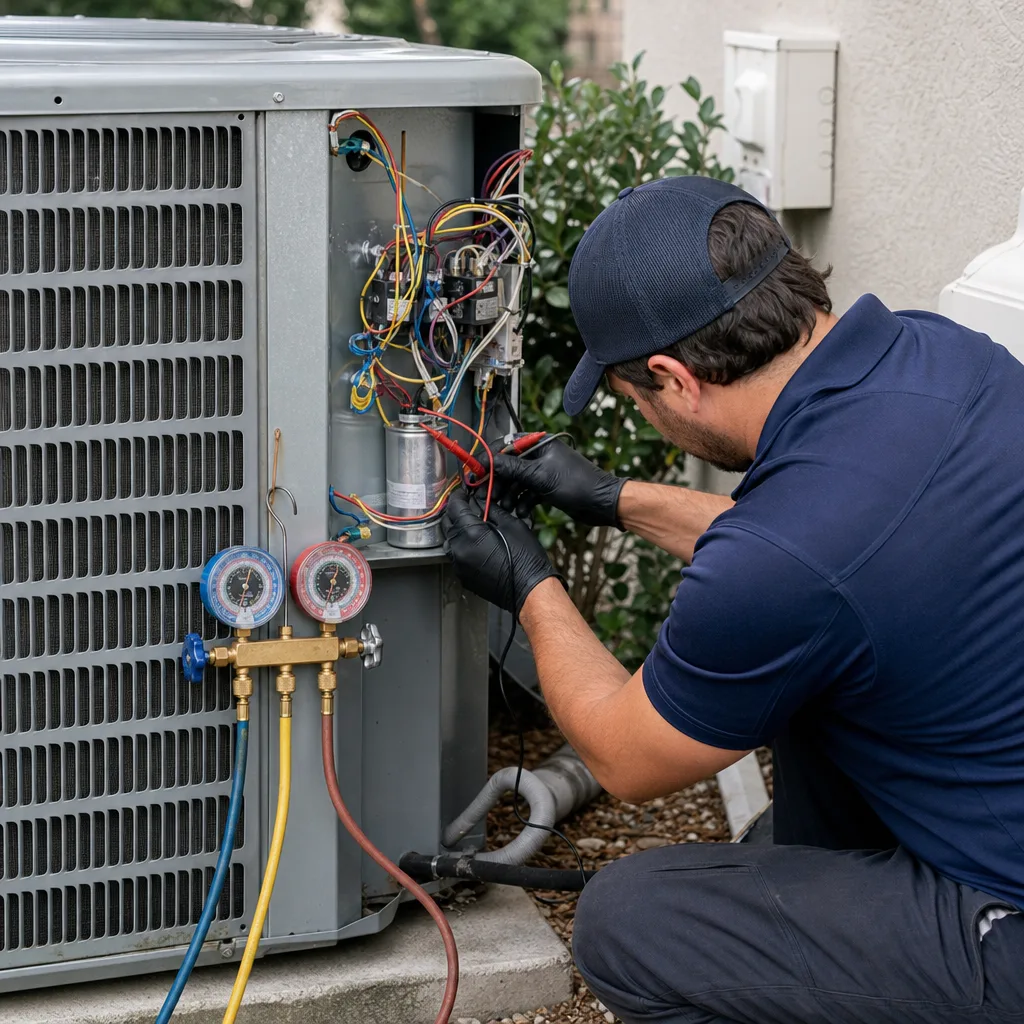
- Capacitor and contactor testing. These are the components that fail most often under sustained summer load. We test them, not just look at them.
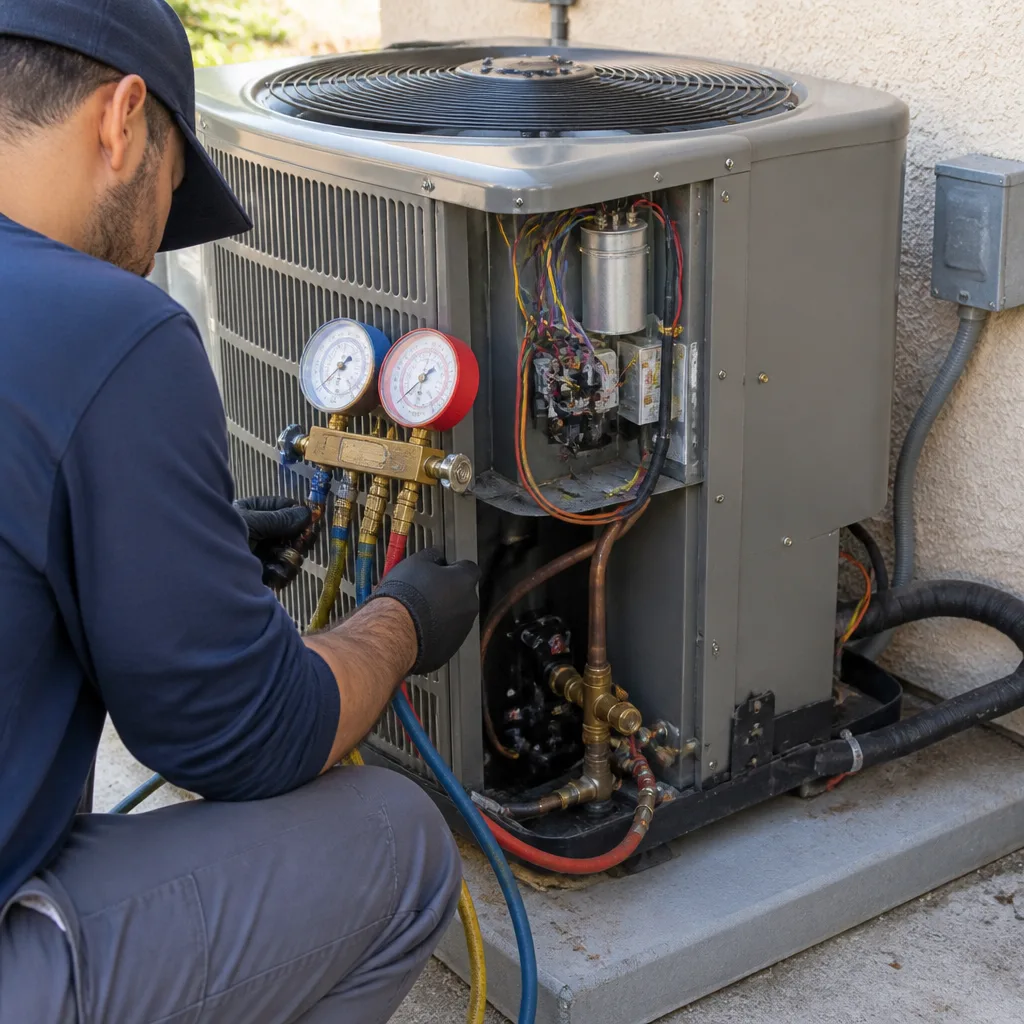
- Refrigerant level and pressure check. Using manifold gauges, we verify the system is holding the correct charge. Low refrigerant means a leak, and a leak only gets worse.
- Condensate drain line flush and drain pan check. We flush the line, check the pan for rust or standing water, and verify the float switch is working if one is installed.
- Outdoor coil inspection and cleaning. We check for salt corrosion, fin damage, and debris, and clean the coil when it needs it.
- Indoor evaporator coil inspection. This requires accessing the air handler, but it’s the only way to catch the kind of coil fouling that silently destroys efficiency.
- Blower motor and fan check. We listen for bearing noise, check the belt if your system has one, and verify proper airflow.
- Full system start-up test. We run the system through a complete cycle and verify it’s cooling to the temperature it should be.
- Using bleach in the condensate drain line every month. Bleach corrodes PVC over time and doesn’t actually break down the biofilm that clogs lines. Distilled white vinegar is cheaper, safer, and more effective for routine prevention in Fort Lauderdale’s humidity.
- Rinsing the outdoor coil with a pressure washer. High-pressure water bends aluminum fins flat, permanently reducing the coil’s ability to release heat. A garden hose on a gentle setting is the right tool.
- Skipping the March tune-up because the AC “seems fine.” Fort Lauderdale systems fail in June, July, and August, but the conditions that cause those failures are visible in March and April. Catching a weak capacitor before summer is a $200 repair. Finding it in August is the same $200 repair plus a week of no AC.
- Replacing the air filter only when the thermostat reminds you. Filter reminder schedules assume a national average for indoor air quality. Fort Lauderdale’s humidity and dust load mean filters load up faster here. Check every 30 days during summer.
- Ignoring the refrigerant line insulation because you can’t see it from the house. The insulation is on the line between the house and the outdoor unit, where it gets full sun and salt exposure. Walk the line twice a year and replace cracked sections before summer.
- Closing supply vents in unused rooms to save energy. Modern AC systems are designed for a specific airflow volume. Closing vents increases static pressure, which reduces efficiency and stresses the blower motor. If you want zone control, install a zoned system, don’t close vents.
- Planting shrubs or installing fencing too close to the outdoor unit. The condenser needs at least two feet of clearance on all sides for proper airflow. Vegetation that grows into the clearance zone reduces cooling capacity and holds moisture against the coil, which accelerates salt corrosion.
Leave to a Licensed Technician
What a Professional Fort Lauderdale Tune-Up Should Include
If you’re going to pay for a professional maintenance visit, which we recommend every spring in Fort Lauderdale, you should know exactly what a thorough tune-up covers. This is the checklist our technicians follow on every maintenance call, and it’s the standard we think Fort Lauderdale homeowners should expect from any company:
Every one of these visits includes a written report of what was checked and what was found. If anything needs repair, you get a written price before any work begins. That’s the way we’ve operated since Victor Mancini founded Cold Harbour Heating and Air in 2003, and it’s the standard we believe every homeowner in Fort Lauderdale should expect from an HVAC company. We also service all major residential brands, including Carrier, Trane, Daikin, and American Standard, so the technician who arrives can work on whatever system is already in your home.
For a deeper look at what goes into repairing a South Florida AC system, see our guide to AC repair in Fort Lauderdale. If your system is past its useful life, our AC installation in Fort Lauderdale page walks through the replacement process, including sizing and efficiency considerations for our climate. And because Fort Lauderdale homes do have heating systems too, even if they get less use, we cover furnace repair in Fort Lauderdale in detail as well. You can also visit our Cold Harbour Heating and Air Fort Lauderdale home page for an overview of everything we do.
Common Mistakes to Avoid
When to Call a Professional
Some AC problems are not maintenance issues and cannot be fixed with vinegar, a hose, or a new filter. Call a professional immediately if you notice any of these: warm air blowing from the vents when the thermostat is set to cool, ice forming on the refrigerant lines or on the indoor coil, water pooling around the air handler or dripping from the ceiling, a burning smell or any electrical smell from the unit, a circuit breaker that trips repeatedly when the AC runs, or any grinding, screeching, or banging noise from either unit. These are signs of component failure, not neglect, and running the system with any of these conditions active usually makes the repair more expensive.
Cold Harbour Heating and Air Fort Lauderdale offers free estimates on repairs and maintenance in Fort Lauderdale. Call (754) 354-7289 and a live person answers, 24 hours a day, 7 days a week.
Frequently Asked Questions
Check your air filter every 30 days from June through September, and replace it whenever it looks dirty or clogged. Fort Lauderdale’s humidity and dust load mean filters load up faster here than the national average, and a dirty filter in peak summer forces your system to work harder and can cause the evaporator coil to freeze. During the mild months from November through February, every 60 days is usually sufficient. After a heavy storm or any construction work in your home, check the filter immediately.
You can flush your own AC drain line with distilled white vinegar as a preventive measure, and we recommend doing it monthly from June through September. Pour one cup of vinegar down the drain line access point, wait 30 minutes, then flush with warm water. If the line is already fully clogged, if water is backing up, or if you see water pooling around the air handler, call a technician rather than trying to force the clog through. A fully blocked line needs compressed air or a wet-dry vacuum, and overflowing water can damage your ceiling, walls, or flooring. Call (754) 354-7289 if you’re not sure which situation you have.
A professional AC tune-up in Fort Lauderdale typically runs $89 to $180, depending on the scope of the visit and the condition of the system. At Cold Harbour Heating and Air, you get a written price before any work begins, and that price is what you pay. The annual tune-up is the single best investment you can make in your AC system, because the problems it catches, like weak capacitors and low refrigerant, are the exact problems that cause midsummer breakdowns and cost $300 to $1,500 to repair. Call (754) 354-7289 for a free estimate on a maintenance visit.
If your Fort Lauderdale drain line clogs repeatedly despite monthly vinegar flushes, there are two likely causes. The first is that the line was never fully cleared in the first place, and the vinegar is only temporarily opening a channel through the existing biofilm. The second is an undersized or improperly sloped drain line that holds standing water. Either way, if you have flushed monthly and still get clogs, the line needs a professional cleaning, and possibly a modification to the piping. We see this most often in older Fort Lauderdale homes where the original line was sized for a smaller, less efficient system that removed less moisture from the air.
Yes, and it’s a bigger problem the closer you are to the coast. Homes within two miles of the Atlantic, including most of Fort Lauderdale east of Federal Highway, see accelerated coil corrosion from salt deposition. The salt attracts moisture, which creates an electrolytic environment that eats away at the aluminum fins on the outdoor coil. A simple low-pressure rinse every 60 days removes the salt before it can corrode, and a professional coil cleaning once per year for coastal homes addresses what water alone can’t remove. Ignoring salt buildup is a slow, steady path to early condenser replacement.
For most Fort Lauderdale homeowners, a single annual tune-up in March or April is sufficient, combined with the monthly vinegar drain flush and air filter checks you do yourself. A maintenance plan makes sense if you want priority scheduling during summer, regular reminders for the tasks that actually matter, and twice-yearly professional visits for homes right on the coast where salt exposure is heaviest. Whatever you choose, the key is consistency. A system that gets checked every spring and maintained through peak humidity season will outlast one that only sees a technician when something breaks. Call (754) 354-7289 and we’ll help you figure out what’s right for your home and your system.
The Bottom Line
Fort Lauderdale AC maintenance is not complicated, but it is specific, as you’ll find in more guides & resources from our team. The tasks that matter most here, drain line flushing, refrigerant line insulation checks, and outdoor coil salt rinses, are exactly the tasks that generic checklists either skip or get wrong. Do the monthly vinegar flush during summer, check the filter every 30 days, rinse the coil every 60 days, walk the refrigerant line twice a year, and schedule a professional tune-up every spring. That routine will prevent the vast majority of Fort Lauderdale AC breakdowns. When something does need professional attention, get a written price before the work starts, and ask what’s covered if the repair fails. A good HVAC company in Fort Lauderdale will answer that question in writing without hesitating.
Written by Victor Mancini, Owner at Cold Harbour Heating and Air Fort Lauderdale, serving Fort Lauderdale since 2003.
See the difference
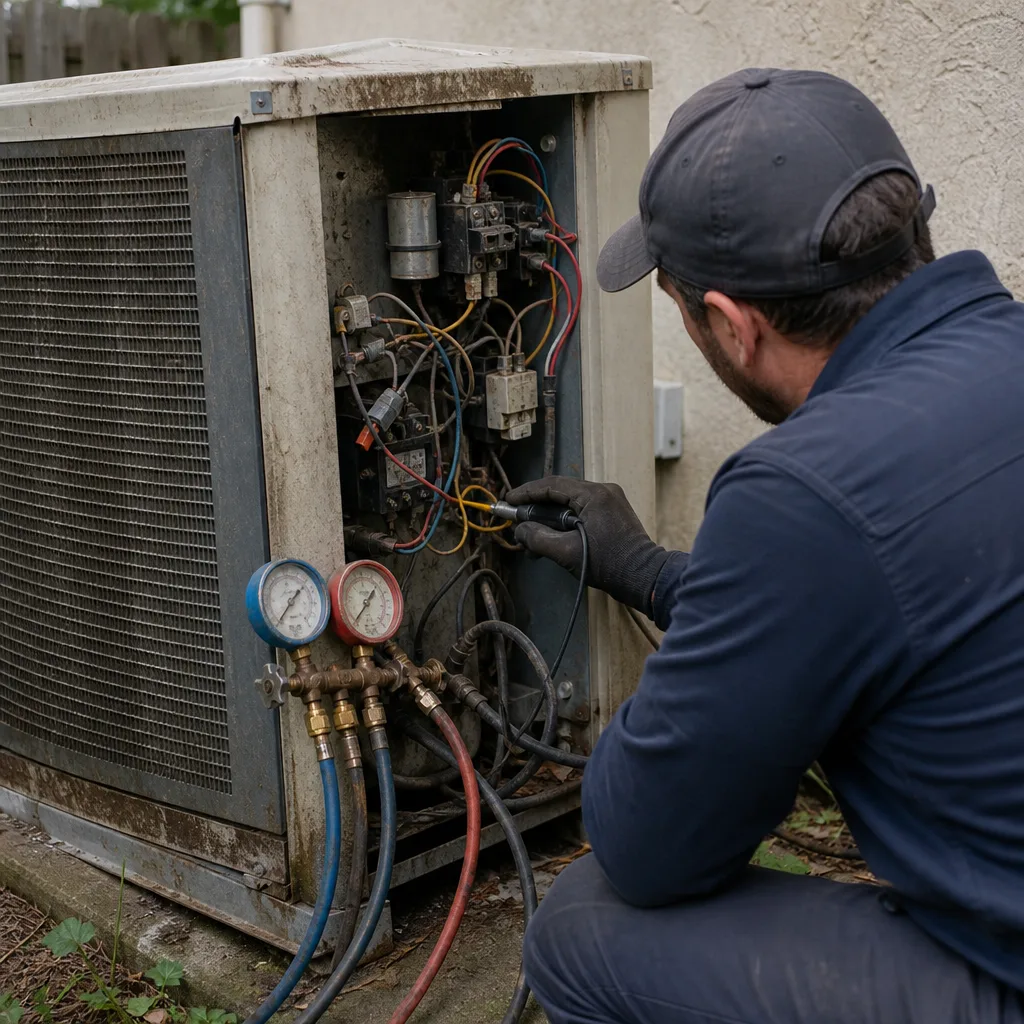 Before
 After
After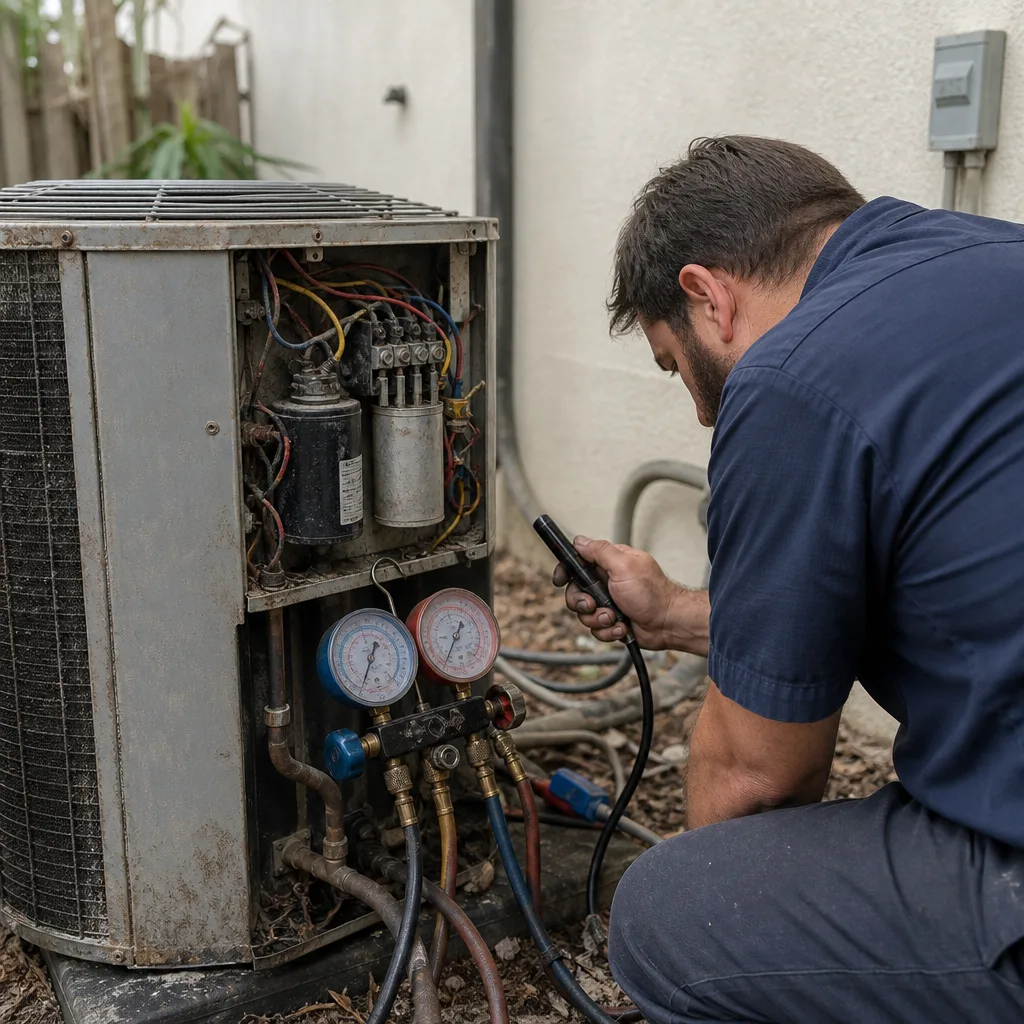 Before
 After
After Before
 After
After