
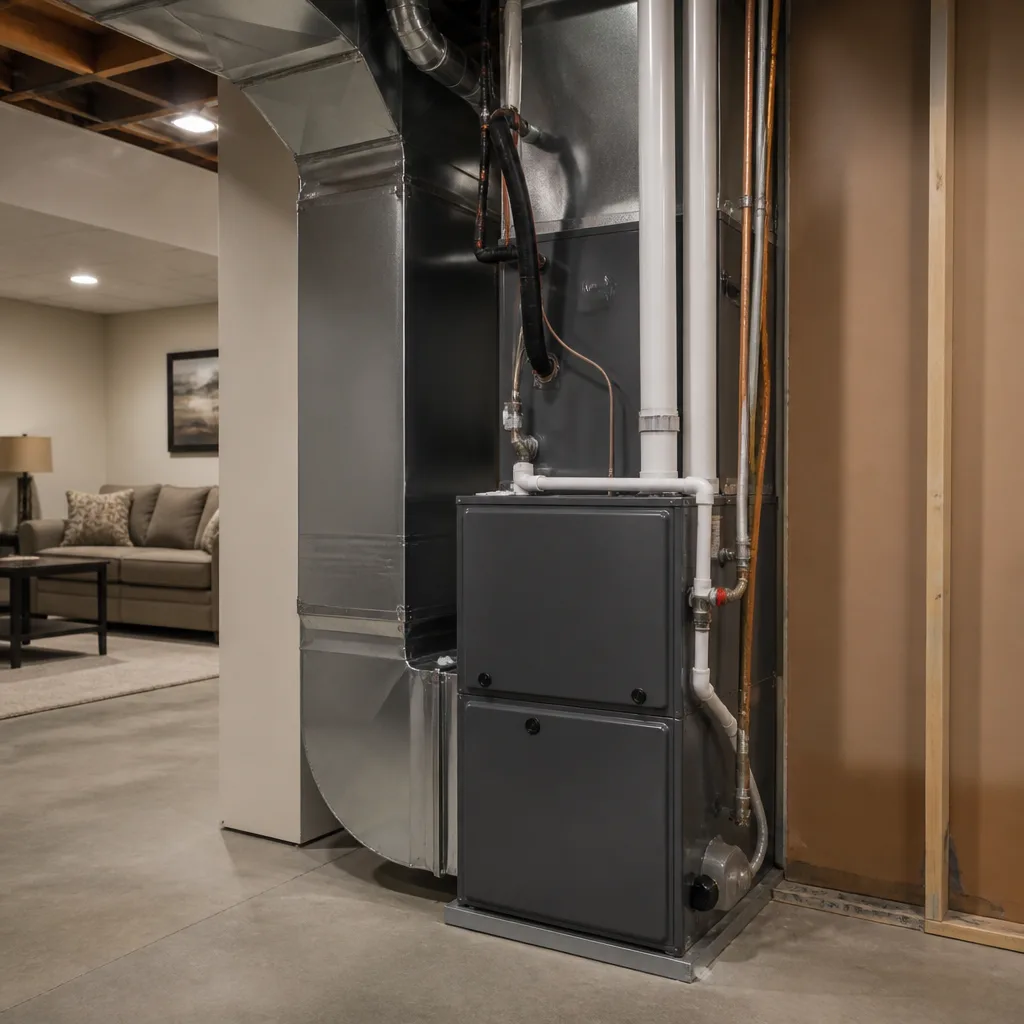
 Furnace & heating
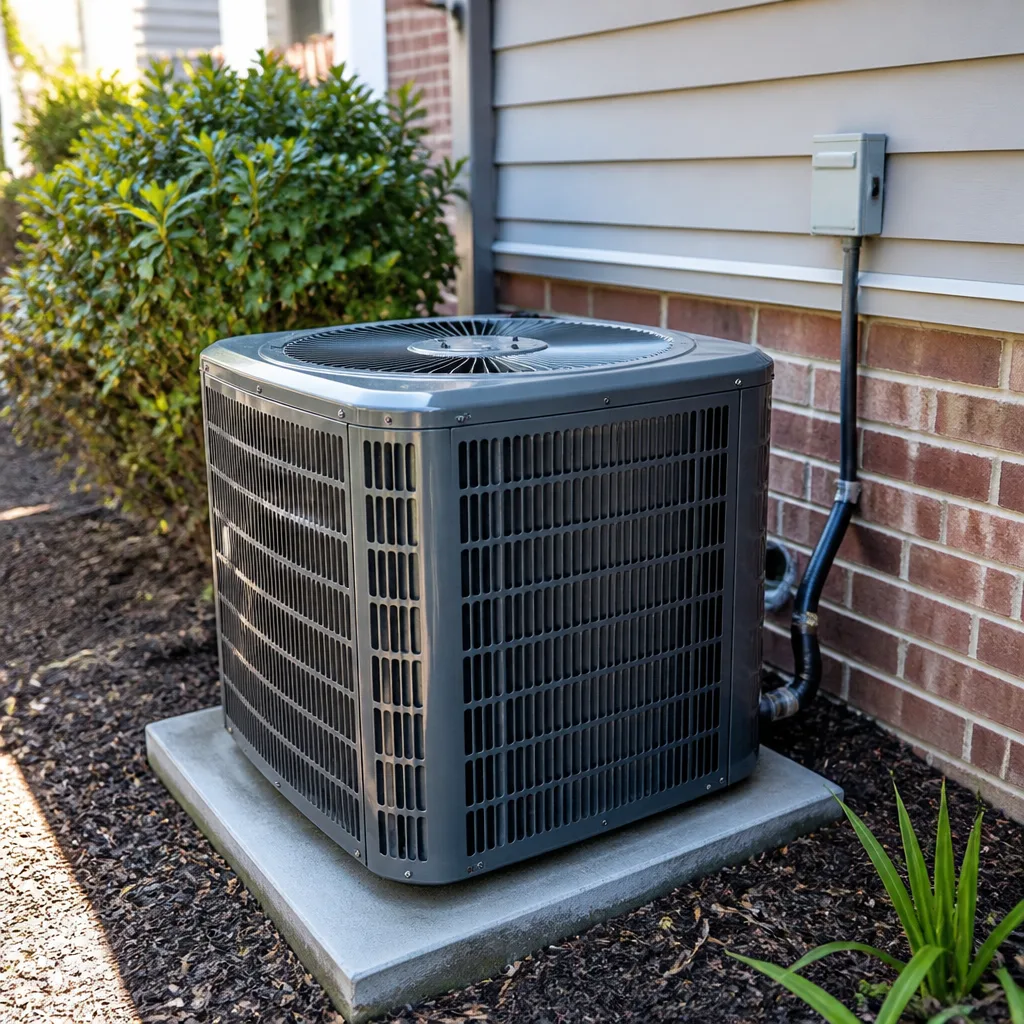 AC repair
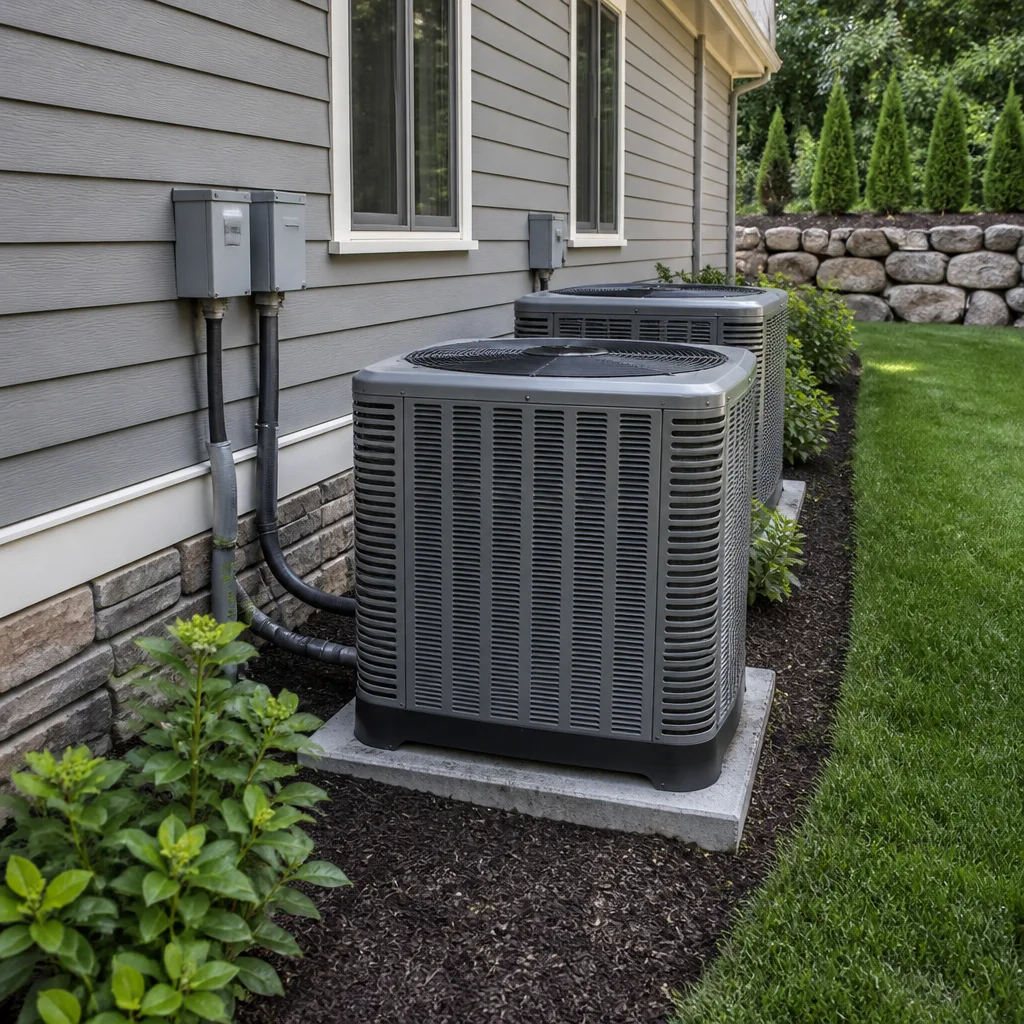 Heat pumps
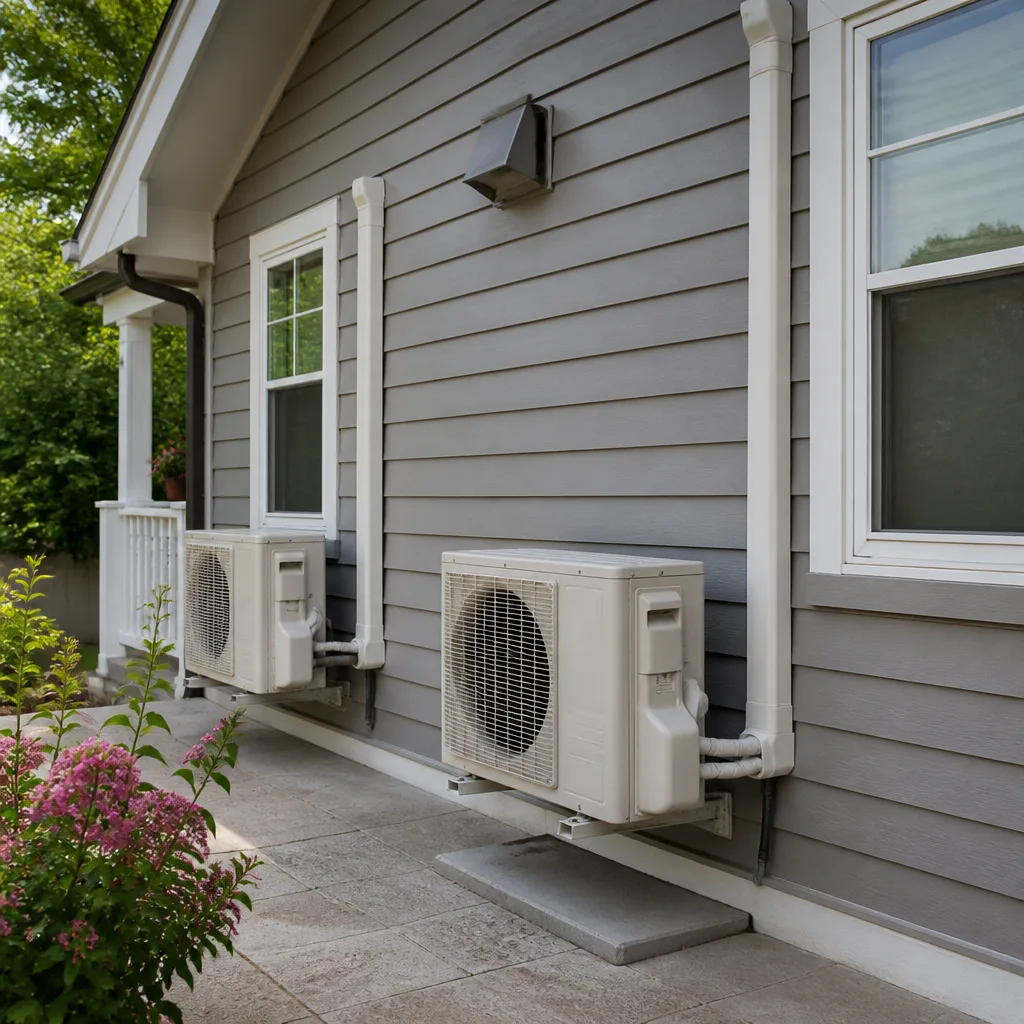 Ductless mini splits
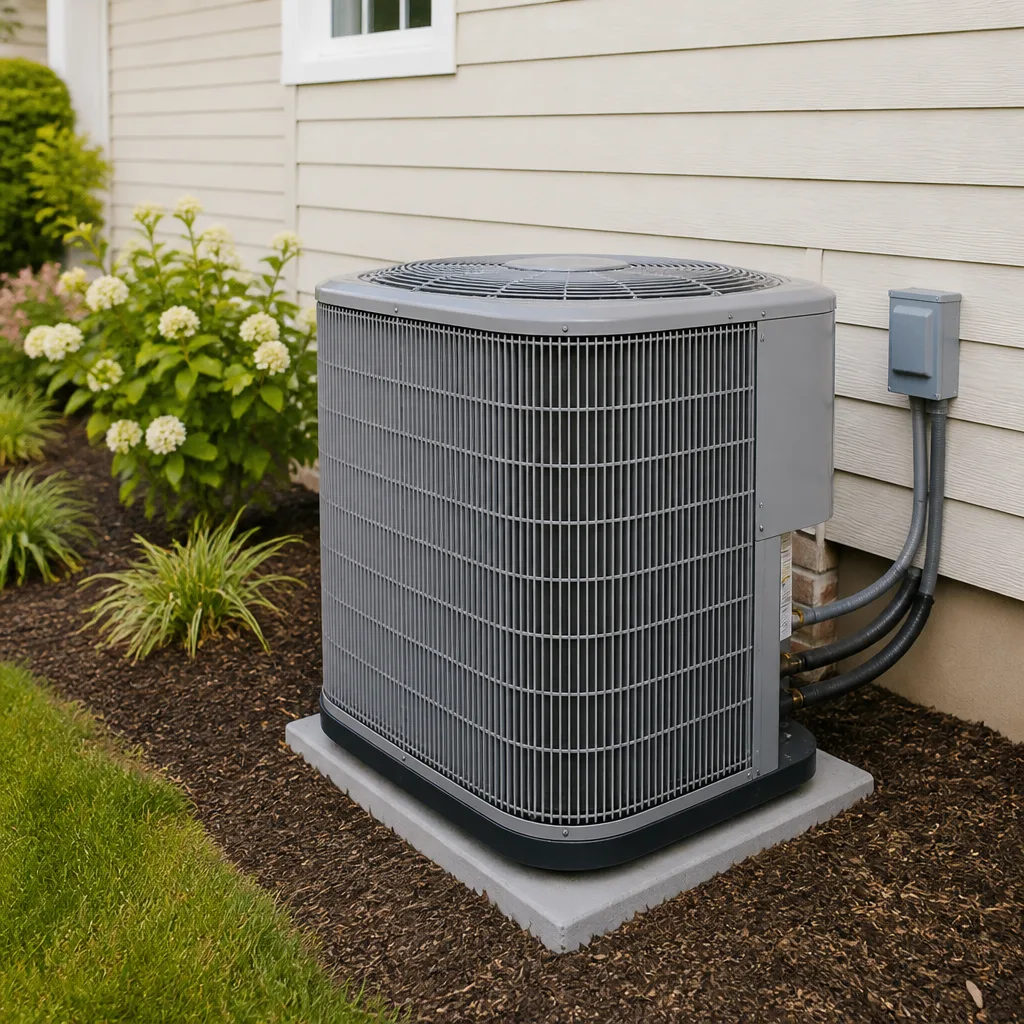 Carrier
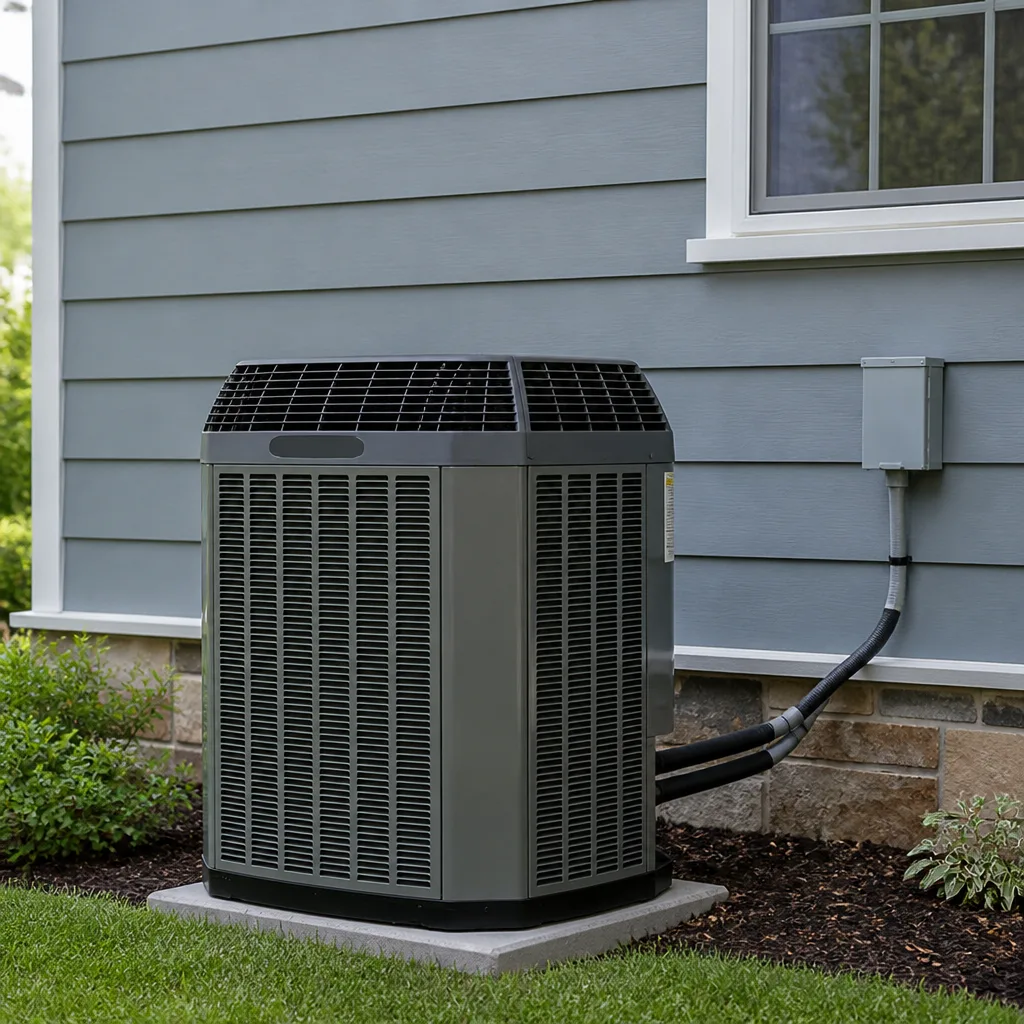 Trane
Trane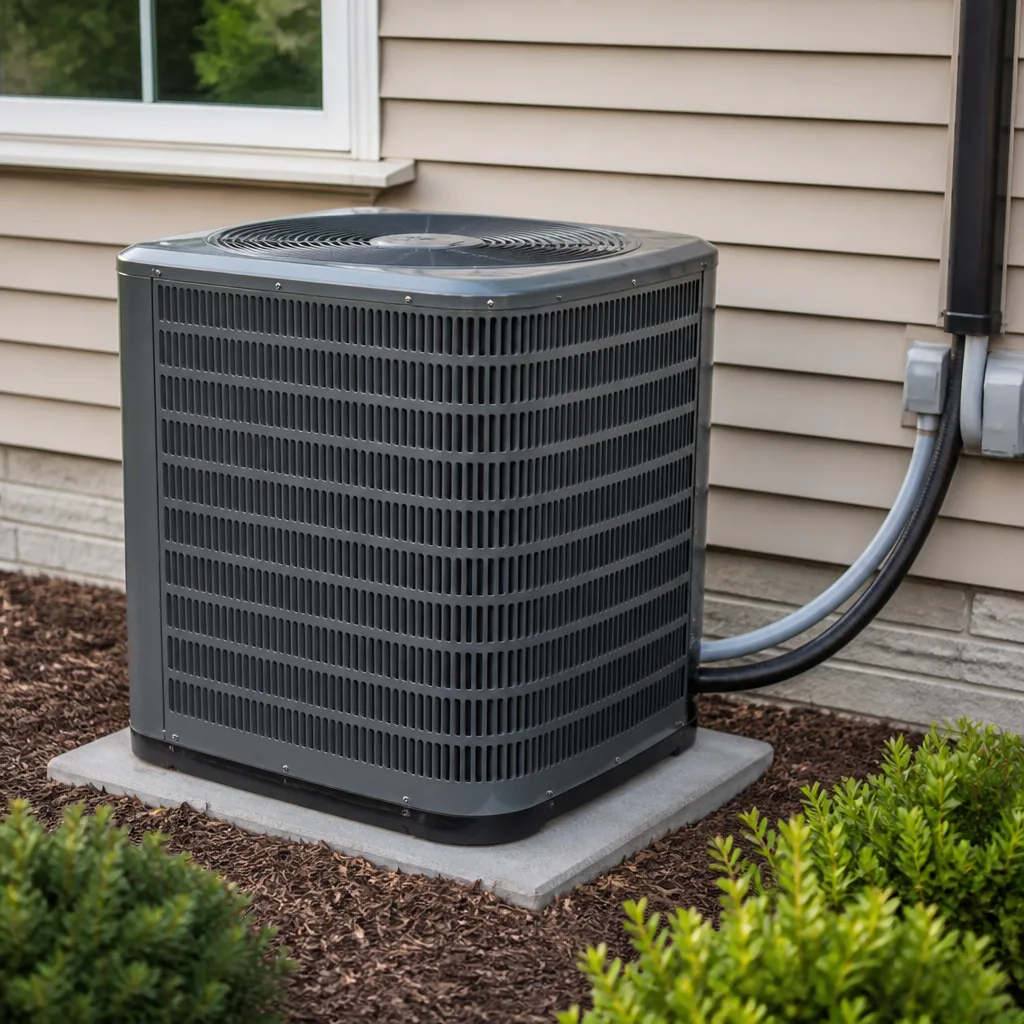 Goodman
Seasonal tune-up and full diagnostic on your Carrier, Trane, or Goodman system - readings shown to you before any repair is proposed
Diagnosis first, numbers second - you approve the repair price before a single part goes in.
Get your free estimateStyles & brands we work with
See the difference
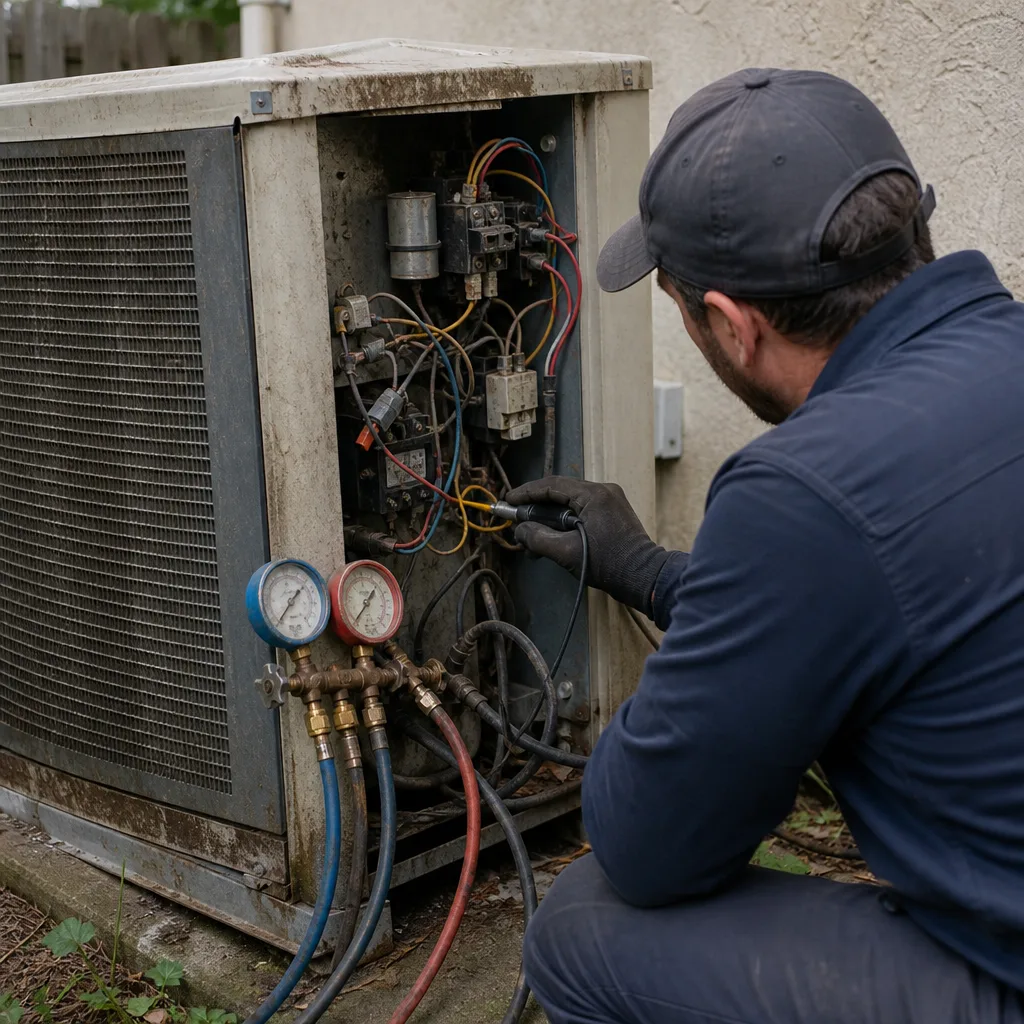 Before
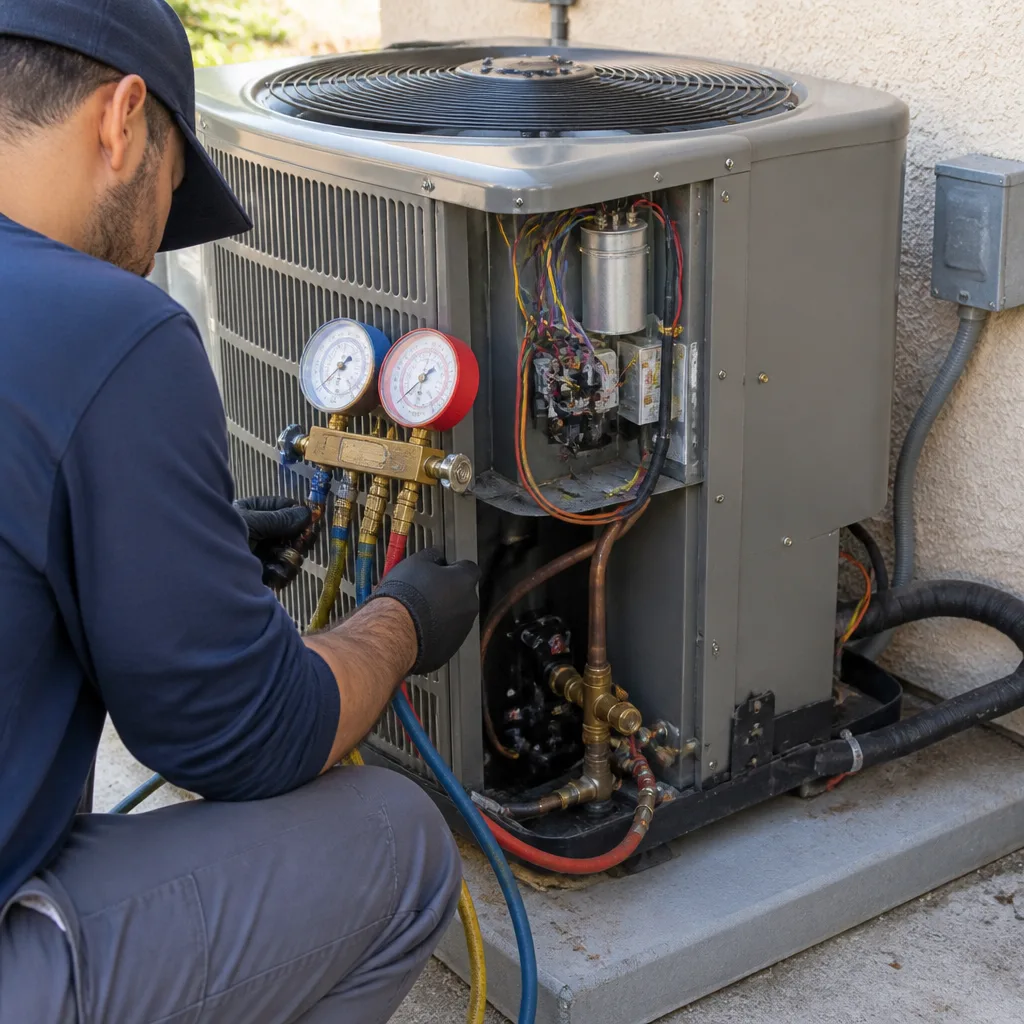 After
After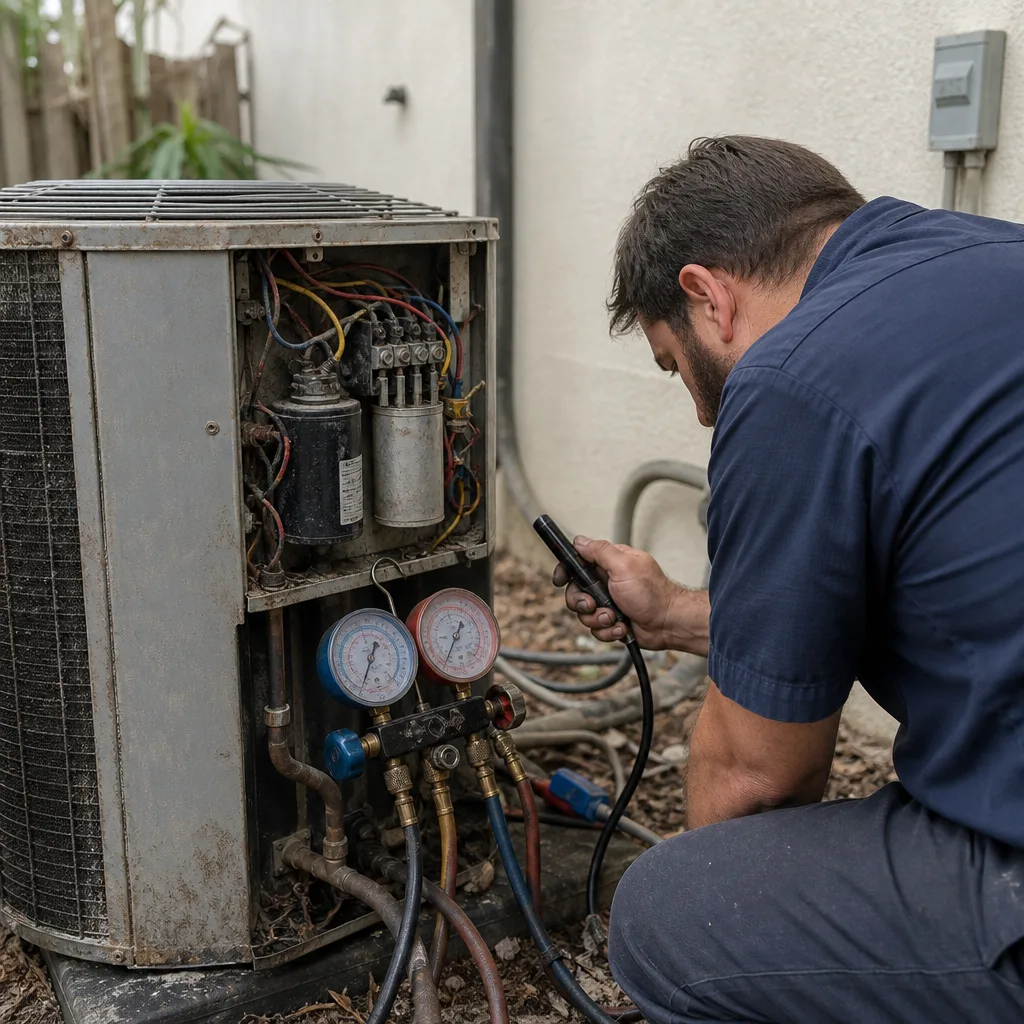 Before
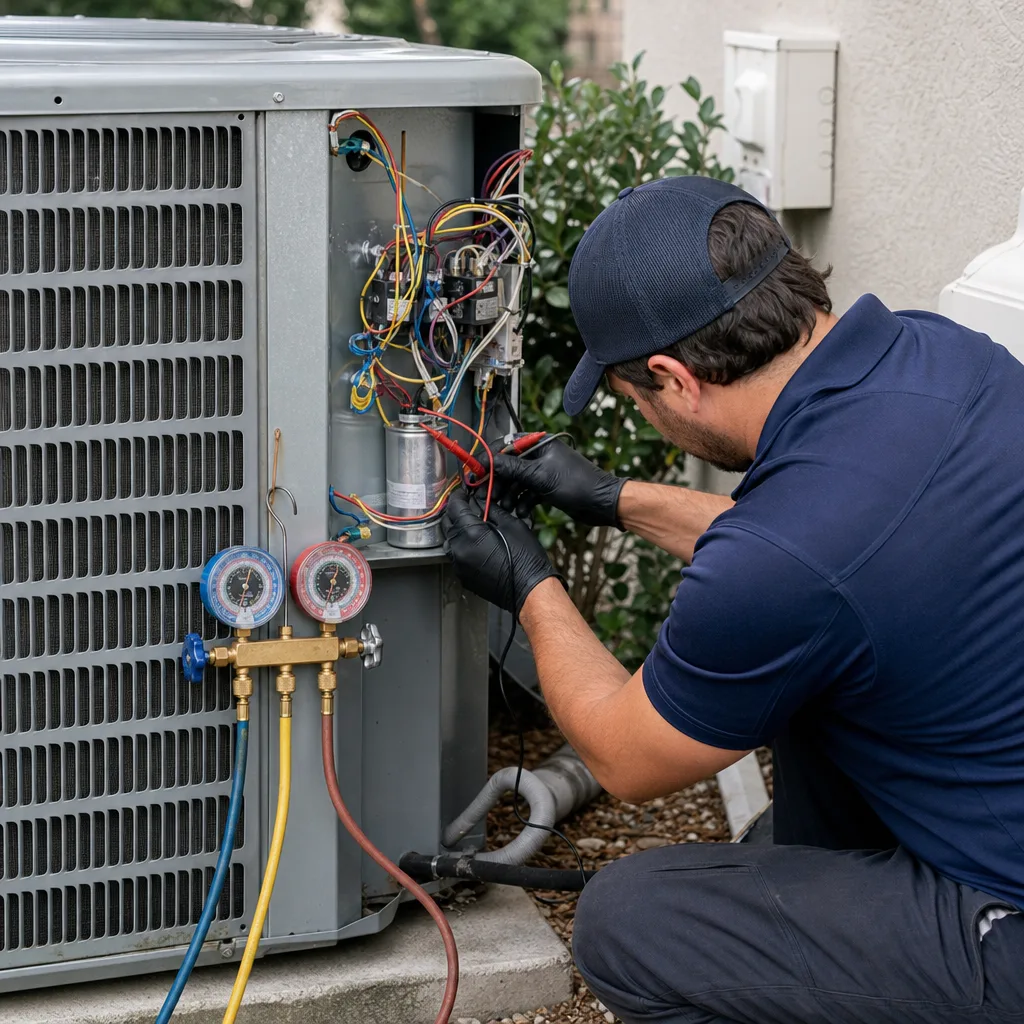 After
After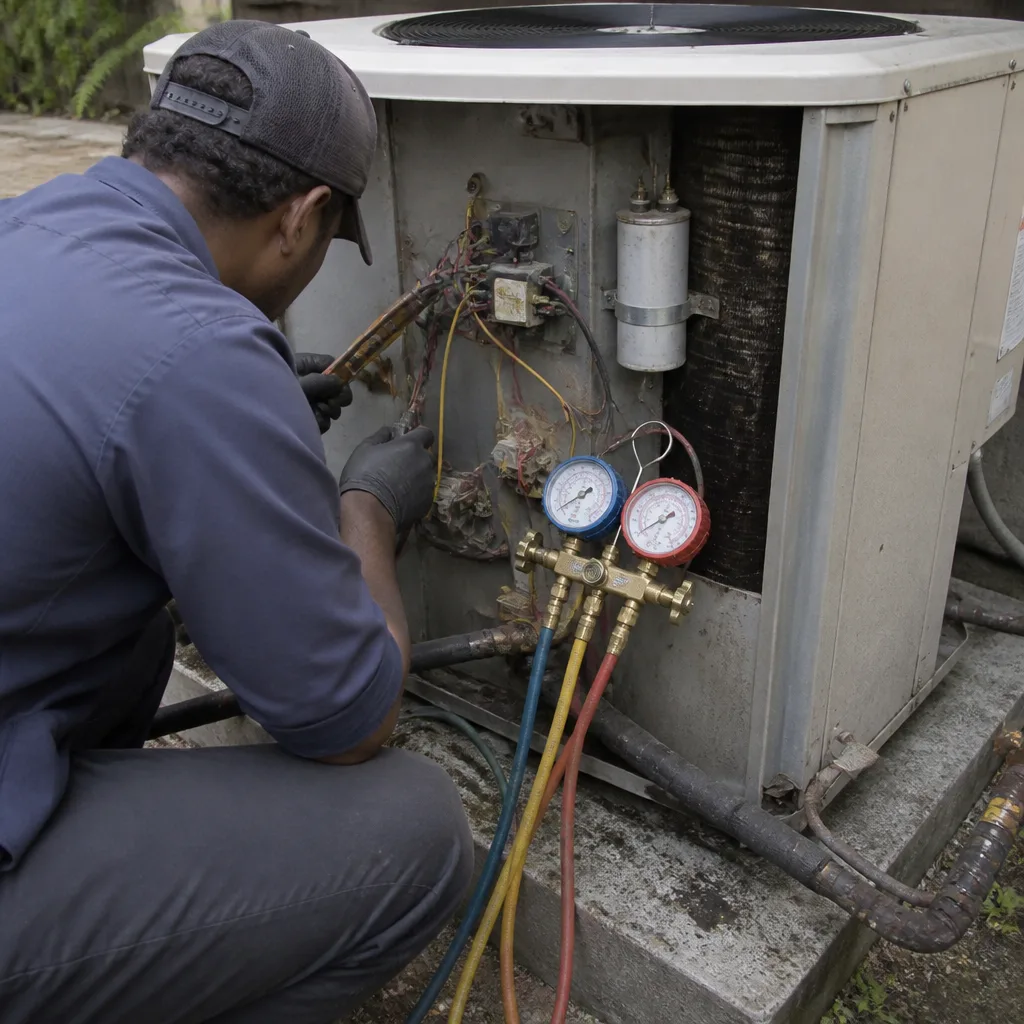 Before
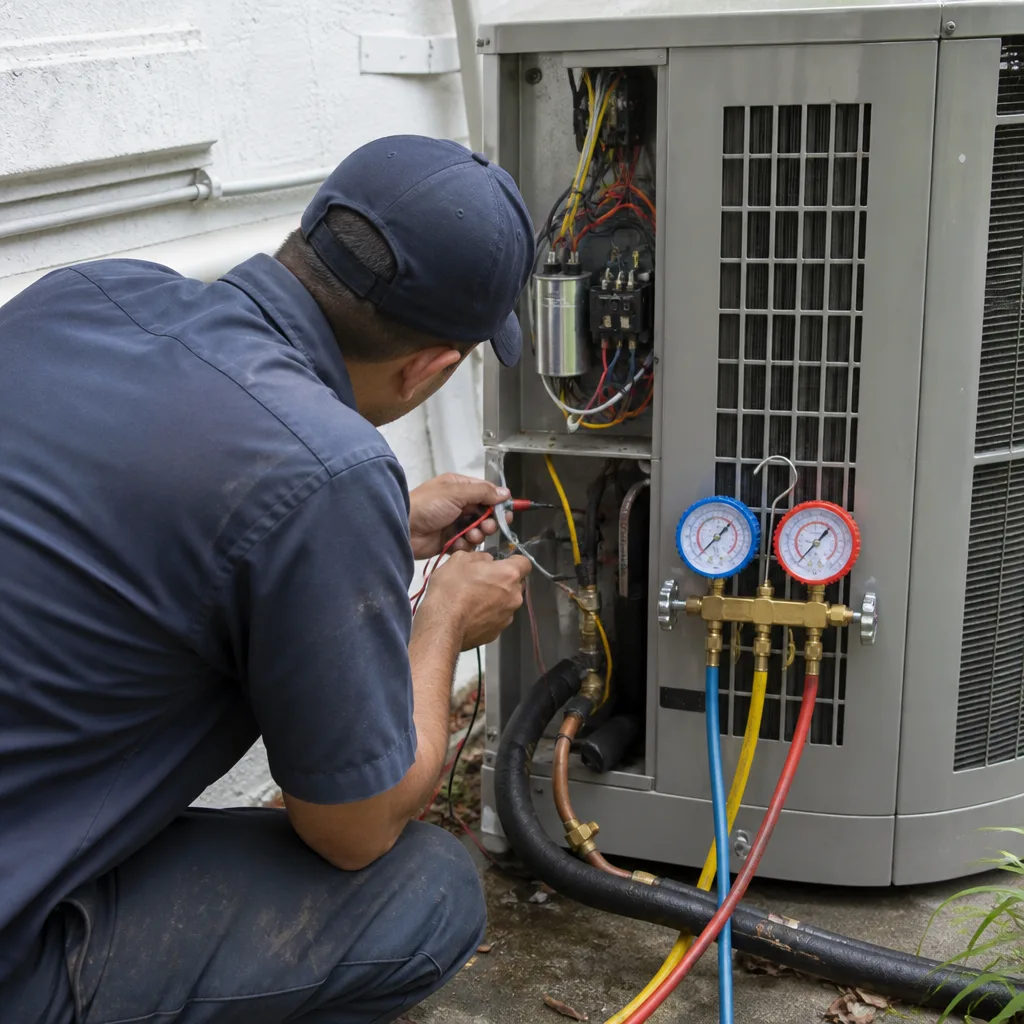 After
AfterHow Much Does AC Installation Cost in Fort Lauderdale?
Most homeowners in Fort Lauderdale pay between $3,500 and $7,500 for a complete AC installation in 2026, with the average falling around $5,200 for a standard 3-ton system in a typical single-family home. This includes the condenser, air handler, line set, thermostat, and full labor. Fort Lauderdale’s coastal climate, salty air, and code requirements for hurricane strapping push costs slightly higher than inland Florida cities like Plantation or Sunrise.
The final number depends on your home’s square footage, existing ductwork condition, SEER2 efficiency rating, and whether you’re replacing a 30-year-old unit or installing brand-new ductwork throughout. At Coldharbour Heating & Air, we hand you a written price before any work begins, so the number you’re quoted is the number you pay. No surprises at the door, no add-ons once we’re in the attic. If you’d like an exact quote for your home, call (754) 354-7289 and we’ll schedule a time that works for you.
Key Takeaways: Fort Lauderdale AC Installation Pricing
- Typical range: $3,500 to $7,500 for a full system replacement or new installation
- Average cost: About $5,200 for a standard single-family home
- Per-ton cost: Expect roughly $1,050 to $1,750 per ton of cooling capacity
- Most common size in Fort Lauderdale: 3-ton unit for homes between 1,400 and 1,800 square feet
- Largest cost driver: Ductwork condition (existing usable ducts vs. full replacement at $2,500 to $6,000)
- Permit costs: Broward County mechanical permits typically run $150 to $400 depending on scope
- Warranty matters: Our 365-Day Done Right Promise covers the installation work for a full year in writing
AC Installation Cost Breakdown (2026)
Here’s what you’re actually paying for when you replace or install a central AC system in Fort Lauderdale. These are line-item ranges we see across the market in 2026. The numbers reflect real bids from licensed contractors in Broward County, not national averages that don’t account for South Florida’s higher labor rates and coastal material requirements.
| Cost Component | Typical Range (Fort Lauderdale, 2026) | Notes |
|---|---|---|
| Condensing unit (outdoor) | $1,800 – $4,200 | Corporate Duct Replacement varies by brand and SEER2 rating; 14.3 SEER2 is the 2026 minimum for Florida |
| Air handler / evaporator coil | $900 – $2,400 | Includes blower motor and coil; variable-speed units cost more |
| Line set (copper refrigerant lines) | $200 – $600 | Length matters; two-story homes need more copper |
| TNC thermostat | $150 – $450 | Smart thermostats like Nest or Ecobee run higher |
| Labor and installation | $1,200 – $3,000 | Includes refrigerant charge, start-up, and permit coordination |
| Ductwork (if replacing) | $2,500 – $6,000 | Most 1970s-era Fort Lauderdale homes need partial or full duct replacement |
| Permit and inspection | $150 – $500 | Broward County requires mechanical permits for full system replacements |
| Hurricane-rating
code compliance |
$100 – $400 | Concrete pad anchors and strapping rated for Miami-Dade building codes |
Now, some context. If your existing ductwork is in good shape (less than 15 years old, no leaks, properly sized), you’ll land closer to the $3,500 to $5,000 range. If you’re in an older neighborhood like Croissant Park, Victoria Park, or Riverside Park where homes were built in the 1950s and 60s, chances are higher that the ducts are deteriorating and need replacement. That pushes you toward the $6,000 to $7,500 zone.
What moves the needle most in Fort Lauderdale specifically? Two things: SEER2 rating and ductwork status. Florida’s building code mandates a minimum 14.3 SEER2 as of 2026, but a high-efficiency 19 SEER2 variable-speed system will add $1,800 to $3,200 to the price and cut your monthly FPL bill by roughly 25% to 35% during peak summer months. We walk through those numbers in the estimate, so you can make the trade-off with real dollar figures, not guesswork. Want to see the numbers for your house? Call (754) 354-7289 and we’ll send someone out for a free estimate.
For a deeper look at how we handle the installation process itself, see our guide on AC Installation in Fort Lauderdale.
What Affects AC Installation Pricing in Fort Lauderdale
- Home size and cooling load: A 1,200-square-foot condo in Sunrise Lakes needs a 2-ton unit, costing $3,500 to $4,800. A 2,400-square-foot single-family home in Plantation requires 4 tons or more, landing at $5,500 to $7,500. The Manual J calculation (a load calculation that measures heat gain through windows, walls, and roof) determines sizing. Any contractor who quotes a price without doing a Manual J is guessing.
- Ductwork condition: Fort Lauderdale’s humidity and heat take a toll on ductwork. Fiberglass ducts from the 1980s and 1990s disintegrate, aluminum ducts corrode in the coastal air. If we’re replacing ducts, that’s $2,500 to $5,000 on top of the equipment cost. Skip this step and you’re paying to cool a moldy, leaky network. We inspect the ducts during the free estimate and show you exactly what we find.
- SEER2 efficiency rating: A base 14.3 SEER2 unit meets code and saves you about 30% on energy versus a 15-year-old unit. A 17 SEER2 unit costs $1,200 to $2,000 more up front, but in Fort Lauderdale where AC runs 9 months a year, the FPL savings can recover that premium in 3 to 5 years. We lay out side-by-side numbers for every efficiency level so you can choose with your FPL bill in front of you.
- Brand and parts availability: Carrier, Trane, and Lennox carry a moderate price premium over Goodman and Rheem. But in South Florida, parts availability is the real cost driver. During a July heat wave, being able to source a compressor from a local distributor beats waiting a week for a backordered part. Our technicians are trained on nine major brands, including Carrier, Trane, Lennox, Goodman, Rheem, York, Daikin, Bryant, and American Standard, so parts and service are never an issue later.
- Access and installation difficulty: A ground-level closet air handler in a Wilton Manors garden apartment costs less to replace than a knee-wall attic unit in a Coral Ridge two-story where the tech needs to navigate a 24-inch crawl space in 115-degree attic heat. Condenser placement matters too: a backyard pad with a clear path to the electrical panel costs less than a side yard behind a gate, under landscaping, or inaccessible to a dolly.
- Building code and permitting: Broward County enforces Florida Building Code with Miami-Dade hurricane requirements for exterior equipment. The condenser pad must be anchored and strapped to meet High Velocity Hurricane Zone standards. A mechanical permit ($150 to $500 depending on scope) must be pulled before work starts, and a final inspection must pass for the job to close out legally. Anyone offering a lower price by skipping permits is passing that liability to you.
Step-by-Step: What Happens During AC Installation
Here’s the process our team at Coldharbour Heating & Air follows on every AC Installation in Fort Lauderdale. This is the same sequence we’ve used since 2003, and it’s the reason we can hand you a written price before the first tool comes out.
- Free in-home estimate and load calculation: A technician visits your home, takes measurements of each room, window, and ceiling, checks the ductwork and electrical panel, and runs a Manual J load calculation. You get a written price that day. That price does not change at the door.
- Equipment selection: We walk through the options: single-stage, two-stage, or variable-speed; SEER2 ratings from 14.3 up to 19; brand preferences; thermostat choices. Every option has a dollar figure attached so you know exactly what you’re choosing.
- Permit pull and scheduling: We submit the mechanical permit to Broward County and schedule your installation window. You get a firm arrival window, not a four-hour spread. Our office runs on The Kingswell Way: say the price before the work, show up in the window given.
- Removal of the old system: On installation day, the crew removes your existing condenser, air handler, and line set. The old refrigerant is recovered, not vented (venting is illegal and bad for the ozone). Old sheet metal, copper, and cardboard are hauled away.
- Installation of the new system: New condenser goes on a code-compliant hurricane-rated pad. New air handler is set and leveled. Line set is brazed with nitrogen flowing through to prevent oxidation inside the copper. Thermostat wiring is connected and programmed.
- Evacuation and refrigerant charge: The system is pulled down to a deep vacuum (typically 500 microns or lower) to remove moisture and contaminants from the lines. Refrigerant is added to the manufacturer’s specified charge. This step is where rushed installers cut corners. We don’t.
- Start-up and testing: The system is powered on, temperature drop across the coil is measured, air flow is verified, and the condenser amp draw is checked against the data plate. The system should be producing a 15 to 20-degree temperature drop at the return air grille.
- Clean-up and final walk-through: The work area is left cleaner than we found it. The technician goes over the installation with you, explains the thermostat, and shows you the filter location. Your written 365-Day Done Right Promise is handed to you before we leave.
- Permit inspection: Broward County schedules the final inspection. We coordinate with the inspector so you don’t have to take time off work. Once it passes, the permit is closed and the job is final.
One thing worth repeating: the price we quote on day one is the price on the final invoice. No change orders, no surprises. That’s part of the four written promises we operate under. If anything about the job scope changes during the day, we’ll stop and talk to you before any additional work happens, and we’ll put those numbers in writing too.
How Much Does AC Installation Cost Per Square Foot in Fort Lauderdale?
For rough planning, Fort Lauderdale homeowners can estimate $2.60 to $4.20 per square foot of conditioned space for a full AC installation in 2026. A 1,500-square-foot home runs $3,900 to $6,300; a 2,000-square-foot home runs $5,200 to $8,400; and a 2,500-square-foot home runs $6,500 to $10,500. Smaller homes cost more per square foot because the fixed costs (equipment, permits, basic labor overhead) spread over less square footage.
But square footage is a blunt tool. Two homes of identical size in Fort Lauderdale can have wildly different cooling loads. A single-story ranch in Riverland with shade trees and a white barrel-tile roof needs far less capacity than a two-story Mediterranean in Coral Ridge with a flat tile roof, west-facing windows, and no shade. That’s why we don’t quote from square footage alone. We measure. It’s free to have us out, and you’ll get a number backed by a real load calculation, not a rule of thumb. Call (754) 354-7289 to schedule.
How to Save on AC Installation
AC installation is a big-ticket expense, but there are legitimate ways to reduce the bottom line without cutting corners on quality. Here’s what we tell our Fort Lauderdale neighbors when they ask:
- Replace in the off-peak months: South Florida AC installers are busiest from May through September. Calls slow down in November through February. Some manufacturers run fall and winter rebates to keep volume moving. You may save $300 to $800 by scheduling replacement between November and February, even though your system works year-round.
- Check for utility rebates: FPL offers rebates for high-efficiency systems above a certain SEER2 threshold. As of 2026, you can typically get $150 to $600 back for installing a 15.2 SEER2 or higher system. We’ll flag eligible rebates in your estimate and give you the paperwork to claim them.
- Don’t skip the maintenance plan: A system that’s been maintained annually lasts 15 to 20 years. A neglected one dies in 10 to 12. If your system is at the edge, a tune-up ($80 to $200) can buy you a year or two of breathing room to save for replacement. That’s the difference between an emergency $6,500 purchase in August and a planned $5,000 replacement in February.
- Size correctly, don’t oversize: An oversized system costs more up front and more every month through short-cycling (turning on and off frequently, reducing efficiency and wearing out parts). A slightly smaller unit that runs longer is cheaper to buy and more comfortable. The Manual J calculation exists for a reason.
- Ask about multi-stage equipment: A two-stage or variable-speed unit costs more up front, but the energy savings in Fort Lauderdale’s climate are real. If you plan to stay in the home 5 or more years, the monthly FPL savings typically outweigh the higher purchase price. We’ll show you the break-even point in your estimate.
And the most direct way to save: get a written price and compare it. Most companies give a verbal quote that’s subject to change. We hand you a written price that holds. Get three written prices, put them side by side, and see which one has the details spelled out. If one seems too low, ask what’s missing. Permit? Ductwork? Hurricane strapping? A low price that omits these costs is not a low price.
Why Fort Lauderdale’s Climate Makes Installation Quality Critical
Fort Lauderdale is a unique market for HVAC. Here’s what we mean:
Salt air. Homes east of Federal Highway get constant salt-laden breezes off the Atlantic. Standard condenser coils from a northern distributor will corrode in 5 to 7 years here. We spec coastal-rated condenser coatings (an extra $200 to $500 depending on the manufacturer) for homes within 2 miles of the beach. Residents of Rio Vista, Las Olas Isles, and Harbor Beach know exactly what we mean. If you live east of US-1, ask your contractor about coastal-rated equipment.
High humidity, not just high heat. A properly sized AC does two jobs: lowers temperature AND removes humidity. An oversized unit cools the air so fast it never runs long enough to dehumidify, leaving you with a cold, clammy house and a musty smell. Proper load calculation and equipment selection matter more in Fort Lauderdale than in, say, Phoenix, where you’re only fighting heat.
Hurricane season. From June first through November thirtieth, your outside condenser needs to survive windborne debris and storm-force gusts. Florida Building Code requires condensers to be anchored to a concrete pad with specific strapping and anchor hardware. Code-compliant anchoring is not optional; it’s the difference between a system that weathers a Category 2 storm and one that becomes a projectile. Every installation we do meets High Velocity Hurricane Zone requirements.
Year-round runtime. Fort Lauderdale homeowners run their AC for 9 to 10 months a year, sometimes more. A system that costs $500 less but has a lower-quality compressor or thinner cabinet will cost more in the long run through higher energy bills and earlier failure. When you’re paying $200 to $400 a month to FPL from March through November, efficiency matters in real dollars, not just on a spec sheet.
All of this is why the installation itself matters as much as the equipment. A poor installation of a great system performs worse than a great installation of a good system. We’ve been installing in Fort Lauderdale since 2003, and we’ve seen what the elements do to corners. We don’t cut them. See our AC installation guide for the full scope of how we work.
New AC Installation vs. Replacement: Cost Differences
There’s a difference between replacing an existing system and installing one where none exists. In Fort Lauderdale, the cost spread runs about $2,000 to $4,500.
A replacement means your home has existing ductwork, an electrical disconnect, a condenser pad, and a refrigerant line set already in place. The old equipment comes out, new equipment goes in, and you’re done. Cost: $3,500 to $6,500 for a typical home.
A new installation (meaning your home has no central AC, or the existing system is a window unit or a ductless split) requires design and installation of ductwork from scratch, new electrical circuits, new refrigerant lines, and possibly a new condenser pad poured to code. Cost: $6,000 to $12,000 depending on home size and ductwork complexity. Older Fort Lauderdale neighborhoods like Tarpon River, Sailboat Bend, and Dorsey Riverbend have many 1940s and 1950s homes that either never had central AC or whose original ductwork was removed decades ago. A full new installation in those homes runs at the higher end of the range.
If your home currently runs on window units or portable AC units and you’re considering a conversion, the energy savings alone typically pay back the installation cost in 4 to 7 years in Fort Lauderdale’s climate. The comfort difference is dramatic. We’ll tell you honestly if your home is a good candidate for a central system or if a ductless mini-split would serve you better.
AC Installation Brands: What Fort Lauderdale Homeowners Should Know
Our technicians are trained on nine residential HVAC brands: Carrier, Trane, Lennox, Goodman, Rheem, York, Daikin, Bryant, and American Standard. Here’s what we see in the Fort Lauderdale market:
- Carrier: Premium brand with a strong dealer network in Broward County. Parts are locally available. Expect to pay a $500 to $1,200 premium over equivalent Goodman or Rheem models. Excellent long-term reliability.
- Trane: The “runs forever” brand. Rugged construction, particularly the all-aluminum spine-fin coil on higher-end models. Prices run $400 to $1,000 above budget brands. If you stay in the home 10+ years, Trane’s durability often pays for itself.
- Lennox: Strong efficiency ratings. The Dave Lennox Signature Collection competes with top-tier Carrier and Trane units. Mid-range models are competitive. Local parts support is solid.
- Goodman: The value play. Lower initial cost than the premium brands, and with a proper installation, Goodman units can deliver long, reliable service. Fort Lauderdale parts availability is excellent. You sacrifice some quietness and efficiency features at the bottom of the lineup.
- Rheem: Competitive middle ground. Rheem’s higher-efficiency lines offer good value. We see many Rheem units in older Fort Lauderdale homes as replacements from the 2000s and 2010s.
- Daikin: Strong presence in the ductless and multi-zone market. If your home’s layout makes ductwork impractical (common in older Fort Lauderdale homes with flat roofs and no attic), Daikin mini-splits may be the right solution.
Our advice: choose the installing company first, then the brand. The best brand in the world performs poorly if the installation is rushed. The standard “builder grade” Goodman installed properly with correct duct sizing and a proper refrigerant charge will outperform a top-of-the-line Carrier installed by a crew that skips steps. We’ll install whatever brand you prefer and stand behind it with our written 365-Day Done Right Promise.
FAQs: AC Installation Cost in Fort Lauderdale
How much does it cost to install a new AC system in Fort Lauderdale?
Most Fort Lauderdale homeowners pay $3,500 to $7,500 for a complete AC installation in 2026, depending on home size, efficiency rating, and ductwork condition. A standard 3-ton unit for a 1,400 to 1,800 square foot home falls in the $4,500 to $6,000 range including installation, permits, and the 365-Day Done Right Promise. Call (754) 354-7289 for a free written estimate for your specific home.
What is the cheapest AC installation option in Fort Lauderdale?
A budget installation with a 14.3 SEER2 Goodman or Rheem unit, a 2-ton condenser, and existing usable ductwork starts around $3,500 for smaller homes and condos. Savings beyond that usually come from skipping permits, skipping hurricane strapping, or cutting corners on evacuation and start-up procedures. Those corners cost more in the long run. The better way to save is scheduling replacement in the off-peak months (November through February) and checking FPL rebates for high-efficiency equipment. We’ll show you all the eligible rebates in your free estimate.
Is it cheaper to repair or replace an AC unit in Fort Lauderdale?
The rule of thumb: if the repair costs less than $650 (our typical repair range is $150 to $650) and your system is under 12 years old, repair it. If the repair costs more than $1,500, or your system is 15+ years old, or the compressor is dead, replacement usually makes more sense. A compressor replacement on a 14-year-old system runs $2,200 to $3,400, and you still have a 14-year-old coil, fan motor, and electrical. In Fort Lauderdale where systems run hard, most systems start major-failure cycles after 12 to 14 years. Our technicians will give you an honest recommendation either way, with numbers for both options. Call (754) 354-7289 for a diagnosis and a straight answer.
How long does AC installation take in Fort Lauderdale?
A standard replacement takes 1 day. A full ductwork replacement or new installation in a home without existing ductwork takes 2 to 4 days depending on home size and duct complexity. Permit inspection typically follows within 1 to 2 weeks depending on Broward County scheduling. We give you a firm arrival window before the job starts and a written waitlist price before any work begins, both parts of the way we operate.
Do I need a permit for AC installation in Fort Lauderdale?
Yes. Broward County requires a mechanical permit for any full system replacement or new installation. The permit cost ($150 to $500 depending on scope) is included in our written quote. The permit ensures the installation meets Florida Building Code, including hurricane strapping requirements for exterior equipment. A contractor offering a “no-permit” price is offering to put your home insurance coverage at risk. We handle the permit process from start to finish.
What size AC unit do I need for my Fort Lauderdale home?
For Fort Lauderdale’s climate, plan on roughly 600 square feet per ton of cooling capacity, adjusted for ceiling height, windows, insulation, and roof color. A 1,200-square-foot home typically needs a 2-ton unit; a 1,800-square-foot home typically needs a 3-ton unit; a 2,400-square-foot home typically needs a 4-ton unit. But the only way to know for certain is a Manual J load calculation. We run one free during every estimate. Oversizing is the most common installation mistake we see in Fort Lauderdale, and it leads to humidity problems and higher monthly bills.
For more detail on how the installation process works from start to finish, visit our guide to AC Installation in Fort Lauderdale.
Pricing reflects the Fort Lauderdale market as of 2026. Cold Harbour Heating and Air Fort Lauderdale offers free estimates – call (754) 354-7289. We’ve been serving Fort Lauderdale homes since 2003 as an independently owned and operated member of the Kingswell network, and every installation carries our written 365-Day Done Right Promise. A live person answers the phone 24 hours a day, 7 days a week.
Written by Victor Mancini, Owner at Coldharbour Heating & Air, serving Fort Lauderdale since 2003.
What Our Customers Say
"Honest to a fault. Two companies told me I needed a whole new unit. Coldharbour said mine had years left and just needed a cleaning and a part. Saved me thousands."
- Marcus Reilly"Our upstairs never cooled right. He found the duct run was half blocked and the system low on charge, fixed both, and now the whole house is even. Explained every step."
- Deanna Boleyn"New AC and furnace. They gave me a written quote with a couple of options and no pressure. Showed up on the day they promised and the new system is so much quieter."
- Gloria Dunn